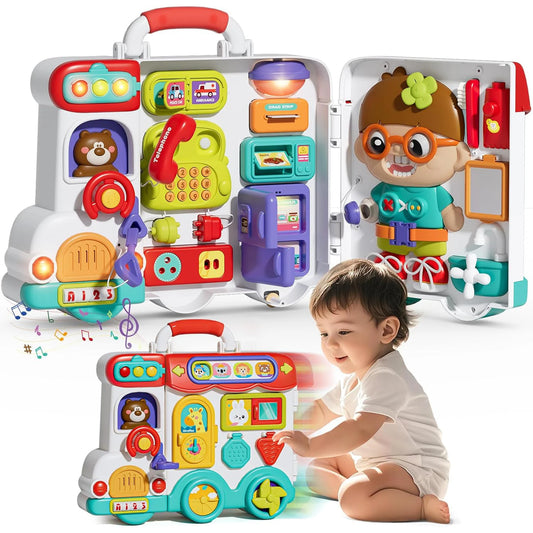
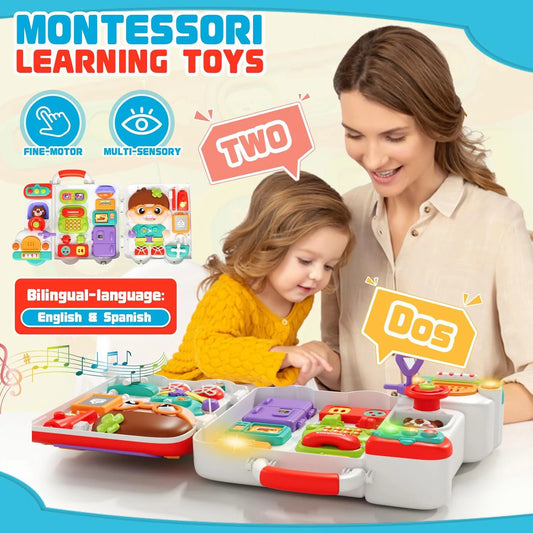
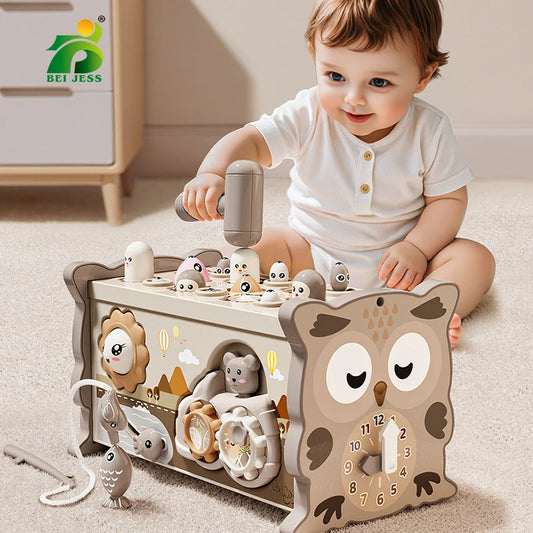
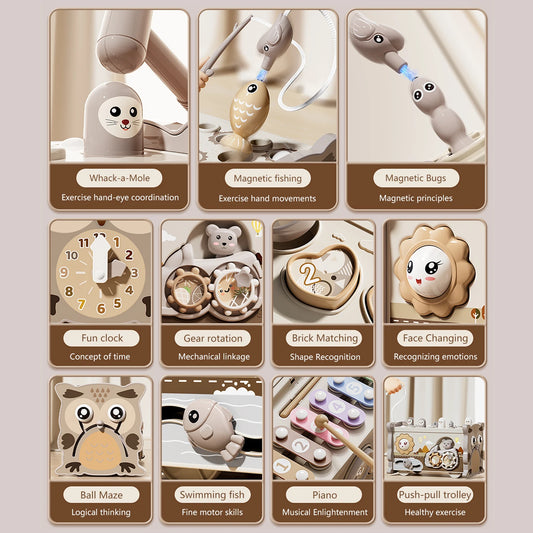

A portable busy board for a toddler should be judged by more than whether it has a carry handle or is labelled “travel friendly”. The useful measurements are its open and closed dimensions, thickness, total weight, hard surfaces, loose components, closure design and storage footprint. Felt books usually compress most easily, flat wooden boards trade flexibility for rigidity, activity cubes take more luggage space, and LED boards add batteries and electronic components to the comparison.
| Format | Portability profile | Main advantage | Main limitation | Often best suited to |
|---|---|---|---|---|
| Felt busy book | Soft, foldable and generally easy to pack | Low bulk and flexible storage | Fabric pages and detachable pieces can be harder to manage or clean | Flights, restaurants and day trips |
| Flat wooden board | Rigid and usually thin compared with cubes | Stable activity surface | Harder edges and less flexible packing | Car trips and short outings |
| Activity cube | Compact footprint but three-dimensional | Activities on several sides | Takes up fixed luggage volume | Home-to-car travel and destinations |
| LED/electronic board | Often flat but includes electrical components | Cause-and-effect switch activities | Batteries, extra inspection and inconsistent specifications | Supervised travel where electronics are practical |
The format that works best depends on the journey rather than activity count. For broader travel considerations—including supervision, age suitability and use during different types of trips—see Travel Busy Board for Toddlers: How to Choose the Right One.
What Makes a Busy Board Truly Portable?
Portability should be measurable. A product can be small from the front but still be inconvenient if it is thick, heavy, rigid or covered in components that catch on other items. Before choosing a compact busy board, look for enough information to understand how much space it will actually occupy and how it behaves when carried.
Dimensions, Thickness and Folded Size
Start with length, width and thickness. For book-style products, both open and closed measurements are useful because the closed size determines whether the toy fits into a backpack, seat pocket or carry-on organiser. Thickness matters especially when several layers of felt, buckles or raised activities make a book significantly bulkier once closed.
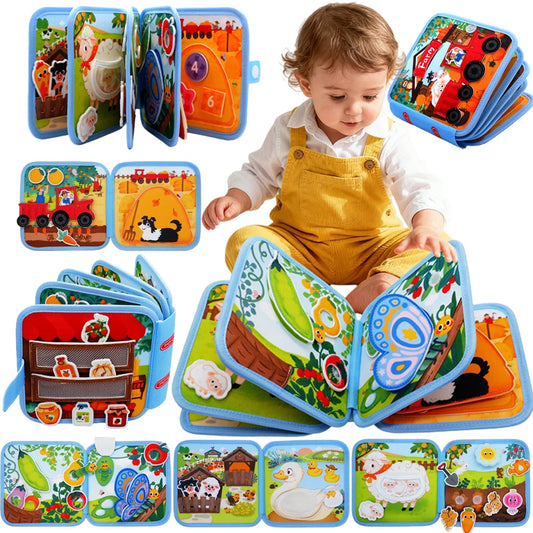
Do not rely on words such as “mini”, “compact” or “travel size” without measurements. For example, a current Toys4us felt busy book is described as lightweight, compact and suitable for backpacks, cars, trains and aeroplanes, yet the retrieved product description does not provide complete dimensions or a stated weight. The portability claim is therefore useful as a description, but shoppers still need measurable specifications before making a direct comparison.
Weight and Hardness
Weight changes how practical the toy feels once it is combined with nappies, snacks, drink bottles and other toddler equipment. A lightweight busy board is particularly useful when a parent will carry the toy for several hours rather than simply moving it from the house to the car.
Material matters as well. A 300 g felt book and a 300 g wooden board do not behave identically when dropped, placed on a tray table or packed next to other belongings. Rigid timber or plastic can create harder impact surfaces, while felt normally compresses and has softer edges. Weight should therefore be considered together with construction rather than as an isolated number.
Closure, Handles and Loose Pieces
A useful portable design should remain closed inside a bag. Check whether the product uses a zip, buckle, hook-and-loop closure, elastic band or another secure method. A handle is convenient, but it does not compensate for pages that open during transport or activities that protrude beyond the edges.
Loose pieces require additional attention. Matching letters, numbers, shapes or removable accessories may provide useful activities, but they can also fall beneath seats or disappear during transit. A portable Montessori busy board with permanently attached components is usually simpler to manage when storage space is limited.
Portable Busy Board Formats Compared
There is no single format that is automatically best. Felt books, wooden boards, cubes and electronic versions solve different portability problems, so comparing their physical construction is more useful than ranking them by the number of activities advertised.

Felt Busy Books
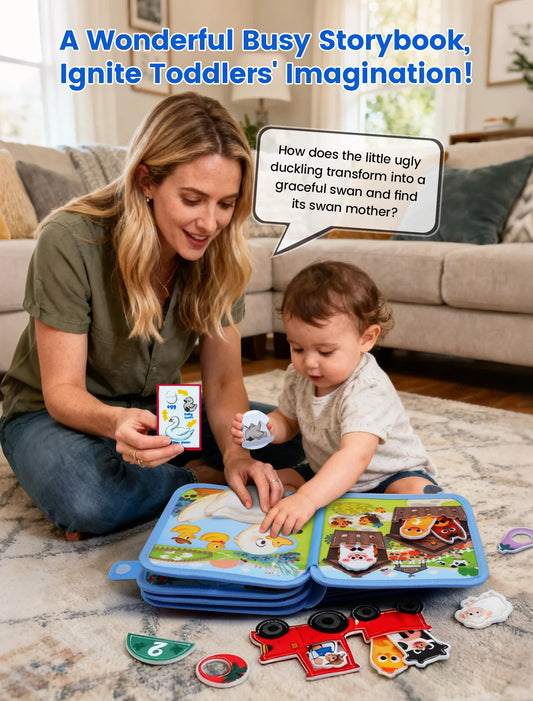
A felt busy book for travel is usually the most adaptable format for luggage. Soft pages can fold together, and the book can often slide beside clothing or into a backpack without requiring a rigid block of space. Felt also avoids the hard corners associated with some wooden products.
The trade-off is organisation. Many felt books use removable matching pieces, hook-and-loop shapes or detachable learning components. One Toys4us model, for example, includes activities involving zips, shoelaces, buckles, letters, weather, animals, colours, numbers and shapes. It is also listed for ages 3–6, which illustrates why parents should check the manufacturer's specific age guidance rather than assuming every soft busy book is intended for every toddler between one and three.
Flat Wooden Boards
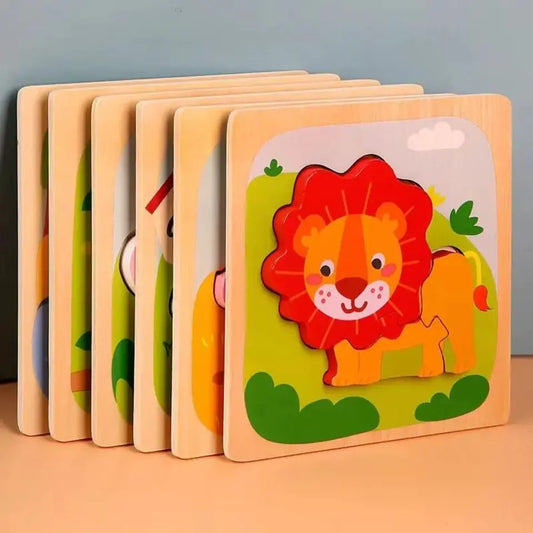
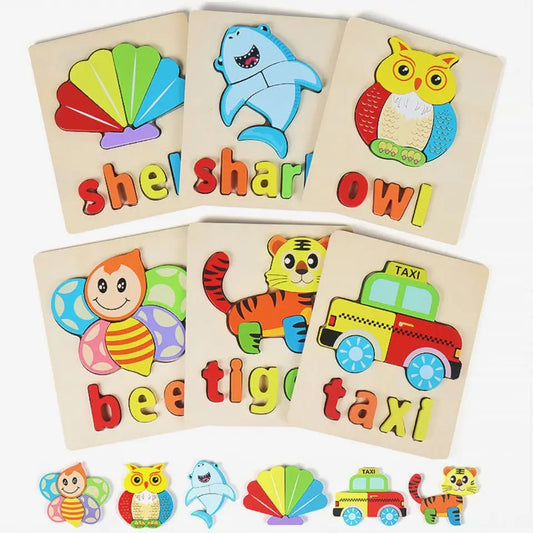
A wooden portable busy board can work well when parents want a stable activity surface without the bulk of a cube. Flat boards may include switches, latches, gears, doors, locks or other fixed mechanisms. Because the activities are mounted directly to the board, there may be fewer loose pieces to manage.
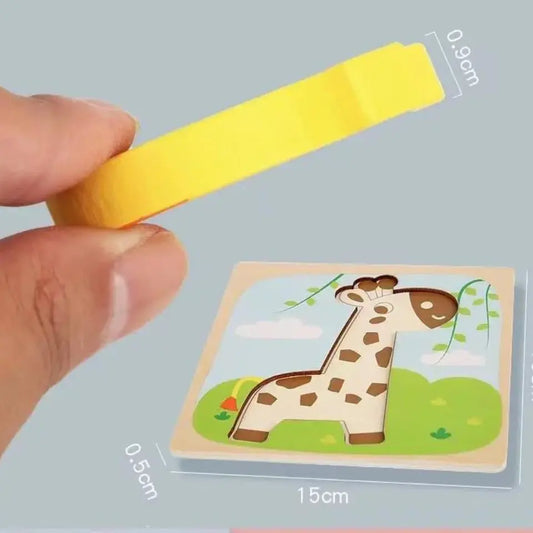
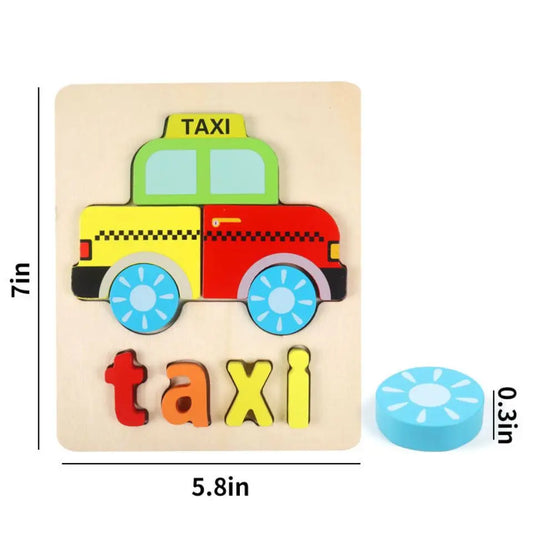
Wood is less forgiving when packing, however. It cannot normally fold around other belongings, and raised components may increase the effective thickness considerably. Check the complete assembled measurements rather than board thickness alone. A current Toys4us wooden product, for example, provides dimensions of 18 × 11 × 6.4 cm, showing why all three measurements matter: a board that appears relatively small from the front may still occupy more than six centimetres of luggage depth.
Portable Activity Cubes
A portable activity cube provides several play surfaces within one object. That can make good use of a small footprint at a destination because the child can rotate the toy instead of spreading several pages or pieces across a table.
The disadvantage is fixed volume. A cube cannot usually be flattened after play, so every centimetre of its height, width and depth remains part of the packing requirement. Cubes may therefore work well for car boots, overnight bags and accommodation but be less convenient in tightly packed cabin luggage. Check whether any pieces detach from the cube and whether there is a practical handle for adult carrying.
LED and Electronic Boards
LED boards often use switches, buttons and lights to create simple cause-and-effect activities. Some are relatively light: one current Toys4us wooden LED board lists an approximate weight of 300 g and an age range of 3–6 years. However, the same listing identifies the product as an LED light busy board while its specification field states “Is Electric: No”. That inconsistency is a reason to verify the actual power arrangement rather than treating one specification field as definitive.
Another Toys4us LED model similarly states “Is Electric: no” but later specifies a power supply of two AAA batteries. Its package also includes a screwdriver. These details affect portability because batteries, battery access and additional accessories create considerations that a simple felt book does not have.
Related Products
Match Portability to Toddler Age
Portability cannot be separated from age suitability. A toy that fits perfectly into a travel bag is still the wrong choice if its manufacturer's age range, warnings or components do not suit the child. This is particularly important across ages one to three because fine motor ability, mouthing behaviour and the ability to manage small activities can change considerably during this period.
For younger toddlers, simpler permanently attached activities may be easier to manage than sets containing numerous removable letters or shapes. Older toddlers may get more use from dressing activities, matching games and multi-stage mechanisms. Compare the manufacturer's stated age information with broader guides such as Choosing the Best Toys for 1 Year Old Toddlers, Best Toys for 2 Year Old Toddlers and The Best Toys for 3 Year Old Children rather than buying only according to the word “toddler”.
Around One Year
Prioritise simple, permanently attached activities and check every component for mouthing and pulling.
Around Two Years
Consider zips, larger buckles, captive sliders and simple matching activities with manageable difficulty.
Around Three Years
More detailed dressing, matching and multi-stage activities may become practical when the product includes age three.
The Portability Measurement Checklist
A product page should provide enough information to let parents compare two toys without guessing. If major measurements are missing, the safest purchasing assumption is not that the toy is small, but that its actual portability has not yet been demonstrated.

What Sellers Should Specify
Look for the following before comparing products:
- Closed length and width
- Open length and width where relevant
- Maximum thickness when packed
- Total product weight
- Main construction material
- Closure type
- Carry handle dimensions or design
- Number of removable components
- Whether accessories have their own storage
- Battery type and battery requirements for electronic versions
- Recommended age and warnings
- Cleaning instructions
These fields are more useful than statements such as “perfect for travel”. If one product provides exact dimensions and another only says “portable”, the accurately measured product is easier to evaluate even if the second appears smaller in photographs.
How to Compare Useful Activities
Activity count can be misleading. Twenty tiny matching pieces may produce a larger advertised number than five securely mounted buckles and switches, but the five attached activities may be far easier to use on a train or restaurant table.
Consider how many activities remain usable without laying parts across a large surface. Also check whether the child needs adult help to organise components after each activity. A broader Busy Board guide can help explain activity types, while Best Educational Toys for Toddlers: Development Guide for Ages 1-3 provides a wider developmental context beyond busy boards alone.
Higher Activity Count
- May include many tiny matching pieces
- Can require a larger working surface
- May need more adult help to organise
- Introduces more pieces to store and retrieve
Fewer Attached Activities
- Can remain usable within one defined area
- May be easier to manage on a lap or table
- Requires fewer components to store
- Can be simpler to inspect before and after travel
Cleaning and Storage
Cleaning requirements become more important when a toy regularly travels between floors, restaurant tables, cars and public transport. Felt may absorb spills and can require more drying time, while sealed hard surfaces may be easier to wipe but can contain seams, switches or battery areas that need special care.
Always follow the manufacturer's cleaning directions. Before storage, check that the board is dry, that removable pieces are accounted for and that nothing has loosened during the trip. A dedicated pouch can make sense for products with unavoidable accessories.
Test the Board Against the Journey
The best way to choose a format is to mentally place the toy into the actual journey. Ask where it will be stored, where the child will use it and what happens when play finishes suddenly.

Plane and Carry-On Use
For flights, folded size and thickness are especially important. A felt book can usually share a narrow luggage compartment with other soft items, while a rigid cube requires its full volume throughout the trip. A flat wooden board may still work if its dimensions fit easily inside the selected carry-on bag.
Loose pieces are particularly inconvenient in confined seating. Activities that remain attached to the board reduce the likelihood of components dropping beneath seats. Electronic versions also require parents to understand how the toy is powered and pack it according to relevant travel requirements.
Car Use
In a car, compact storage matters, but the way the toy behaves when not being used matters too. A rigid board or cube should have a secure storage location rather than remaining loose in the passenger area.
Do not assume that a strap supplied with a busy board means it should be attached to a child restraint. Follow the child restraint manufacturer's instructions and keep toys from interfering with the harness, buckle or correct restraint fit. A soft, easy-to-store quiet portable toddler toy is often simpler to manage between play periods.
Restaurants, Trains and Day Trips
Restaurants and trains favour toys with a small working footprint. A busy book can be opened one page at a time, while a flat board may provide all its activities within one defined area. Cubes use more vertical space but can still work well if the table is stable and sufficiently large.
For day trips, carrying weight becomes more noticeable because the toy may remain in a backpack for much of the day. This is where a genuinely lightweight busy board has an advantage over a product that is technically portable but uncomfortable to carry repeatedly.
Which Portable Busy Board Format Is the Most Practical?
For maximum packing flexibility, felt is generally the easiest format because it folds and adapts to available luggage space. A flat wooden board can be a better choice when fixed components and a stable activity surface matter more than flexibility. Cubes make efficient use of several activity surfaces but occupy fixed three-dimensional space, while LED boards can be compact yet introduce battery and component considerations.
Instead of choosing entirely by material, record the dimensions, thickness, weight, closure and detachable components of each shortlisted product. A portable busy board for a toddler is genuinely portable only when those measurements suit the specific bag, vehicle, table and journey where the family intends to use it. Parents looking more broadly at Montessori-style products can also compare the principles in A Guide to Montessori Toys for Toddlers in Australia.
Frequently Asked Questions
What Size Is a Portable Busy Board?
There is no single size that defines a portable busy board. A useful product should fit comfortably into the bag or storage area intended for the journey without forcing parents to reorganise essential items.
Compare closed length, width and maximum thickness rather than looking only at the front dimensions. For foldable products, also check their open size so you know how much table or lap space they require during use.
Is Felt More Portable Than Wood?
Felt is generally easier to compress, lighter to handle and more flexible when packing around other items. This often makes it particularly convenient for carry-on bags and day trips.
Wooden boards can still be highly portable when their dimensions and weight are modest. They also provide a rigid surface and may use more permanently mounted activities. The better choice therefore depends on whether flexible packing or structural stability matters more.
Is a Busy Board Cube Practical for Flights?
It can be, but check all three dimensions before buying. A cube may have a small footprint while still occupying considerable luggage volume because it cannot fold flat.
Cubes are generally most practical when there is enough cabin-bag space and the activities are securely attached. A flat felt book is usually easier to place into a heavily packed bag.
How Heavy Is Too Heavy for a Toddler Travel Toy?
There is no universal cut-off because acceptable weight depends on who carries the toy, how long it must be carried and what else is in the bag. A few hundred grams may feel insignificant during a car journey but matter more during a full day of walking.
Compare shortlisted products by total weight and construction. The goal is not simply to find the lowest number but to avoid unnecessary weight for the amount of usable play the product provides.