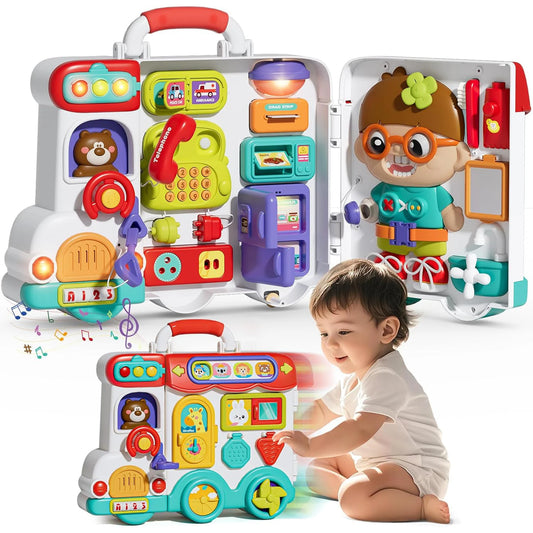
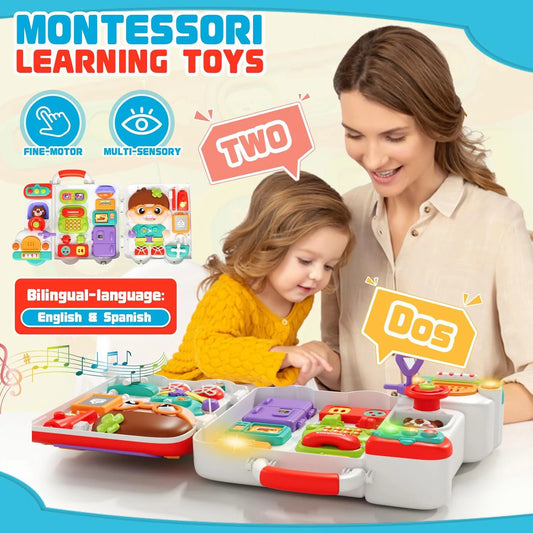
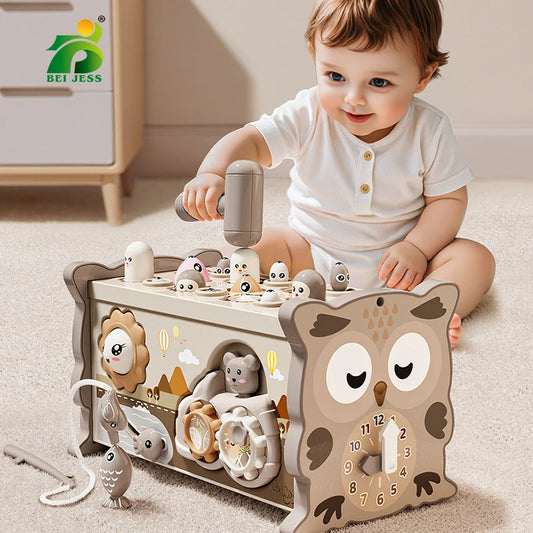
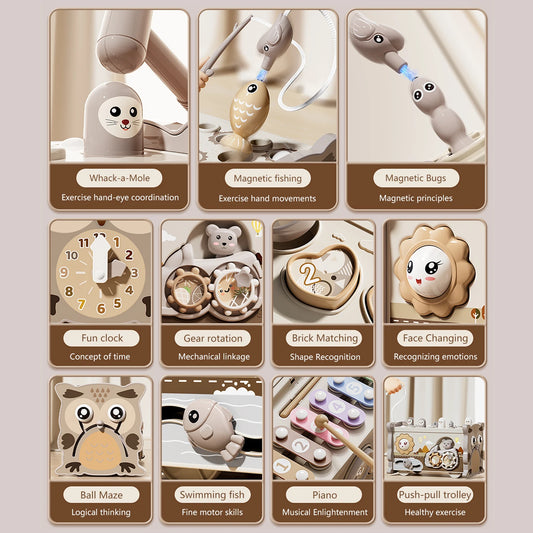

Your toddler isn’t just playing, they’re building the foundation for lifelong cognitive skills.
Every tower they build, every puzzle they solve, and every “pretend play” moment is shaping their brain development. But not all toys are created equal.
The best educational toys for toddlers are designed to do one thing: turn everyday play into meaningful learning experiences that support problem-solving, creativity, language development, and motor skills.
In this guide, you’ll learn how to choose toys that truly support your child’s development from ages 1 to 3.
| Age Range | Key Developmental Skills | Recommended Toys |
|---|---|---|
| 12–18 months | Motor skills, cause-effect | Shape sorters, stacking blocks |
| 18–24 months | Problem-solving, language | Simple puzzles, pretend play toys |
| 2–3 years | Creativity, early literacy | Advanced puzzles, role-play sets |
Why Educational Toys Matter for Brain Development
Research in early childhood development shows that 90% of brain growth occurs before age five. Harvard Child Development Center research supports the importance of early childhood brain development during the first five years.
During this period, hands-on play is one of the most effective ways children develop cognitive and emotional skills. According to developmental psychology studies, interactive play helps strengthen neural pathways responsible for:
- Problem-solving and reasoning
- Language acquisition
- Fine motor coordination
- Emotional regulation
This is why open-ended toys are recommended over passive electronic toys.
Your toddler's building a tower. It falls. They rebuild it. Falls again. Rebuild. This isn't just play - it's problem-solving, persistence, and spatial awareness all wrapped into one activity.
The best educational toys for toddlers don't flash or beep. They challenge. They grow with your child. They turn everyday play into brain-building moments. Here's how to choose toys that actually support development.

What Makes a Toy Educational?
Forget toys that do all the work. The best educational toys make your toddler think, create, and figure things out. They're open-ended - a block isn't just a block, it's whatever your child imagines.
Research shows toddlers learn best through hands-on exploration. Between ages 1-3, kids develop crucial skills: hand-eye coordination, problem-solving, language, and social understanding. The right toys support all of this naturally.
Look for toys that:
-
Have multiple uses and grow with your child
-
Require active participation, not passive watching
-
Build specific skills your toddler's developing now
-
Are safe, durable, and made from quality materials
Building Blocks and Construction Toys
Building toys are the foundation (pun intended) of toddler learning. Stacking blocks teaches balance, spatial reasoning, and cause-and-effect. Your 18-month-old knocking down towers? That's physics in action.
Start with larger wooden blocks for younger toddlers. The weight and texture give better sensory feedback than plastic. As they get closer to 3, introduce sets with more pieces and shapes. Our wooden toys collection features blocks that'll last through multiple kids.
Construction toys also build frustration tolerance. When that tower falls for the tenth time, your toddler's learning persistence - a skill that matters way more than perfect stacking.

Shape Sorters and Puzzles
Shape sorters are brilliant for 12-24 month olds. They teach shapes, colors, and spatial awareness while building fine motor skills. Watch your toddler rotate a star piece, trying different angles. That's problem-solving and hand-eye coordination developing together.
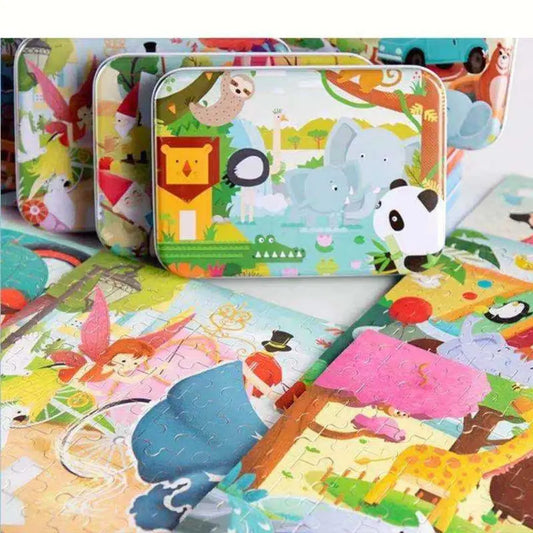
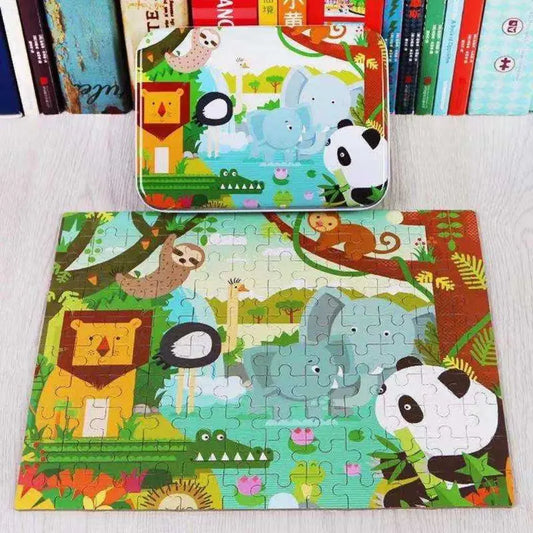
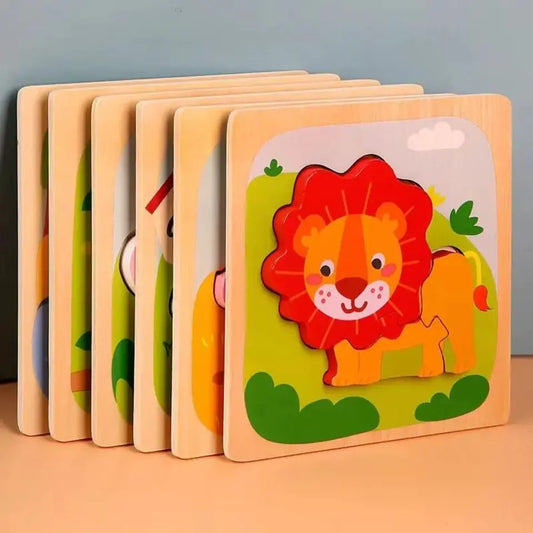
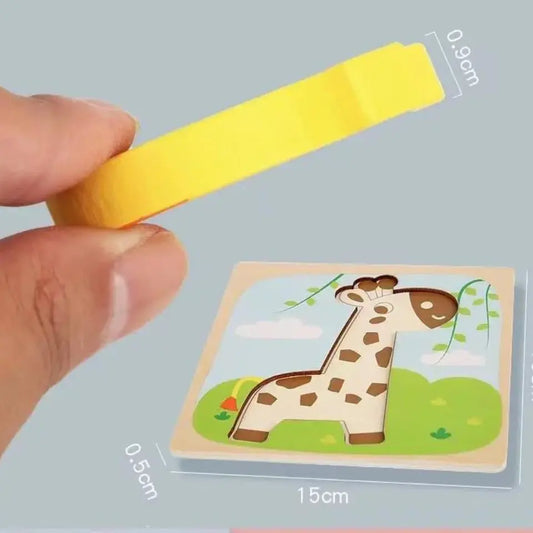
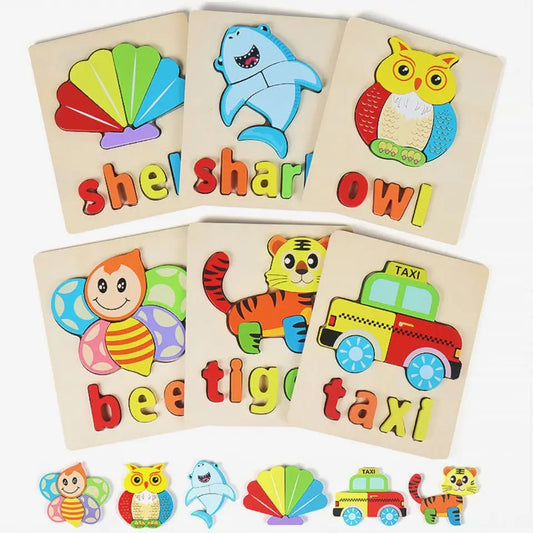
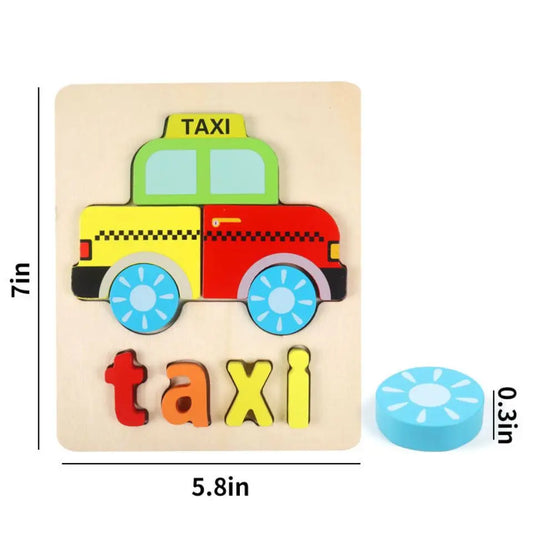
Puzzles step up the challenge. Start with simple 3-4 piece puzzles around 18 months. By age 2, most toddlers can handle 8-12 pieces. Our 3D wooden puzzles for toddlers add an extra dimension that really engages spatial thinking.
Knob puzzles are perfect for beginners - easier to grasp and manipulate. As dexterity improves, move to flat puzzles. The kids wooden puzzle 120 pieces works beautifully for advanced 3-year-olds ready for bigger challenges.

Montessori-Style Learning Toys
Montessori toys focus on real-world skills through self-directed play. They're simple, purposeful, and incredibly effective. Color sorting, threading beads, stacking rings - these activities build concentration and fine motor control.
The beauty of Montessori toys is how they scale with development. A color-matching game that's challenging at 18 months becomes pattern-making practice at 3. One toy, multiple learning stages.
These toys also teach independence. Your toddler figures things out without electronic prompts. This builds confidence and self-reliance - skills they'll need well beyond the playroom.
Creative and Sensory Play
Art supplies aren't just for mess-making (though that's fun too). Finger painting builds fine motor skills and hand strength needed for writing later. Chunky crayons develop the tripod grip. Play dough strengthens those tiny hand muscles.
Sensory play is huge for toddler brains. Different textures, weights, and materials create neural pathways. Wooden toys offer natural sensory experiences plastic can't match - the grain, the warmth, the satisfying weight.
Check out our painting and craft collection for age-appropriate art supplies. Choose washable, non-toxic materials. Your walls will thank you.

Music and Movement Toys
Musical toys support language development, rhythm, and coordination. Banging on a drum isn't random noise - it's cause-and-effect learning and rhythm exploration. Toddlers who play with instruments often develop better language skills.
Simple instruments work best. Shakers, drums, xylophones - things your toddler can actually play. Electronic toys that play music for them? Skip those. You want active music-making, not passive listening.
Movement toys like activity games help with gross motor development and body awareness. They get toddlers moving, jumping, and coordinating their bodies in space.
Pretend Play and Role Play
Around 18 months, pretend play explodes. Your toddler feeds a teddy, talks on a toy phone, "cooks" dinner. This isn't just cute - it's how they process their world and develop social skills.
Play kitchens, tool sets, dolls - these toys let toddlers practice real-life scenarios. They're working through emotions, trying out language, and building empathy. When your 2-year-old "feeds" their stuffed animal, they're practicing care and nurturing.
Pretend play also builds narrative skills. Kids create stories, remember sequences, and use imagination. These are pre-literacy skills disguised as play.
Language and Early Literacy
Books are hands-down the best educational investment. Board books for younger toddlers, picture books with simple stories for 2-3 year olds. Reading together builds vocabulary, comprehension, and a love of learning.
Letter puzzles and alphabet toys support early literacy, but there's no rush. Focus on language-rich play first. Talk about what you're doing, narrate your day, ask questions. Conversation beats flashcards every time.
Toys that encourage language - puppets, toy phones, play food - give toddlers reasons to talk and practice new words in context.
Age-Specific Recommendations
12-18 Months: Shape sorters, stacking toys, push/pull toys, simple musical instruments, large building blocks. Focus on cause-and-effect and basic motor skills.
18-24 Months: Basic puzzles (3-6 pieces), beginner art supplies, pretend play toys, books with simple stories. They're ready for more complex problem-solving.
2-3 Years: Advanced puzzles (8-20 pieces), building sets, role-play toys, art projects, educational toys that teach colors, numbers, and letters through play.

Choosing Quality Over Quantity
You don't need a playroom full of toys. Five well-chosen toys beat fifty random ones. Rotate toys monthly - what's new becomes interesting again.
Invest in open-ended toys that grow with your child. A set of quality wooden blocks will get more use than a toy that does one thing. Think cost per play, not cost per toy.
Safety matters. Check for:
-
Non-toxic materials and paints
-
No small parts for under-3s
-
Smooth edges and sturdy construction
-
Age-appropriate sizing
Supporting Development Through Play
The toy matters less than how you play together. Get on the floor with your toddler. Ask questions. Make mistakes and laugh about them. Show them it's okay when things don't work the first time.
Let your toddler lead. If they want to use puzzle pieces as food for their teddy, that's fine. Creative play is valuable play. Follow their interests and build on what excites them.
Balance independent play with interactive play. Solo play builds focus and creativity. Playing together strengthens your bond and lets you scaffold learning - helping them stretch just beyond what they can do alone.
Making It Work for Your Family
Budget-conscious? Shop secondhand for toys that last. Wooden puzzles, blocks, and quality toys clean up well and hold value. Skip the trendy plastic toys that'll break in weeks.
Small space? Choose multi-use toys. A set of blocks takes less room than five single-purpose toys and offers more play value. Store toys in bins and rotate them to keep things fresh.
Watch your child play. That's how you'll know what's working. If they ignore a toy, it's either too easy, too hard, or doesn't match their interests right now. Put it away and try again in a few months.
The best educational toys for toddlers are ones they'll actually use. Choose toys that match where your child is developmentally and where they're headed next. Look for quality, safety, and versatility.
Browse our educational toys Australia collection for carefully selected options that support real development. These aren't just toys - they're tools for building the skills your toddler needs to thrive.
Common Mistakes Parents Make When Choosing Toys
- Buying too many toys instead of focusing on quality
- Choosing toys that are too advanced or too simple
- Relying heavily on electronic toys
- Not rotating toys regularly
- Ignoring child-led interests
FAQ
1. What are the best educational toys for toddlers?
The best toys are open-ended, such as blocks, puzzles, and pretend play sets that encourage creativity and problem-solving.
2. At what age should toddlers start using puzzles?
Simple puzzles can be introduced around 18 months, starting with 3–4 piece designs.
3. Do educational toys really help brain development?
Yes. Research shows that hands-on play improves cognitive, language, and motor skill development in early childhood.
4. Are electronic toys good for toddlers?
Minimal use is recommended. Open-ended toys are more beneficial for creativity and learning.

3 comments
This article made it so much easier to avoid overbuying toys. Thanks for the insights!
Loved the section on Montessori toys. Very practical and easy to understand.
Great breakdown of age-appropriate toys. Really helped me choose better options for my son.