
Choosing the best puzzles for toddlers and older children can feel surprisingly confusing. Many parents search for age appropriate puzzles or even look up a complete puzzles by age guide to make the right decision.
A puzzle that’s too easy becomes boring in minutes. One that’s too difficult can quickly lead to frustration, meltdowns, or complete disinterest.
The best puzzles help children develop problem-solving skills, fine motor control, patience, visual perception, and confidence, but only when the difficulty level matches their developmental stage and interests.
In this guide, you’ll learn:
- How many puzzle pieces are appropriate for each age
- Signs a puzzle is too easy or too difficult
- The difference between wooden, peg, floor, and jigsaw puzzles
- How puzzles support brain development
- Expert-backed recommendations by age group
- Common mistakes parents make when choosing puzzles
Whether you're buying a first puzzle for a toddler or looking for a more advanced challenge for a puzzle-loving 6-year-old, this guide will help you choose the right fit.

Puzzles by Age (Age Appropriate Puzzles Guide)
| Age | Recommended Puzzle Type | Piece Count | Key Skill Development |
|---|---|---|---|
| 12–18 Months | Knob puzzles, shape sorters | 1–3 pieces | Hand-eye coordination |
| 18–24 Months | Chunky wooden puzzles | 3–8 pieces | Object recognition |
| 2–3 Years | Simple jigsaw puzzles | 5–12 pieces | Problem-solving |
| 3–4 Years | Peg puzzles, floor puzzles | 12–48 pieces | Fine motor skills |
| 5–6 Years | Traditional jigsaw puzzles | 60–100 pieces | Strategy and patience |
| 7+ Years | Advanced or 3D puzzles | 100+ pieces | Spatial reasoning |
Why Puzzles Are Important for Child Development
According to the American Academy of Pediatrics, puzzle play helps children develop cognitive, physical, and emotional skills through hands-on problem-solving and spatial reasoning.
Puzzles for kids are widely used as developmental puzzles for kids because they support cognitive growth, motor skills, and early learning abilities. Many experts also refer to them as puzzles for child development due to their strong impact on brain development and problem-solving skills.
Research also shows that puzzles can support:
- Fine motor development
- Memory and concentration
- Visual-spatial awareness
- Persistence and resilience
- Early mathematical thinking
Children who regularly engage in puzzle-based activities often develop stronger independent problem-solving abilities over time.
Why Age Guidelines Aren't Enough
Those age recommendations on puzzle boxes? They're starting points, not rules. Your advanced 3-year-old might breeze through puzzles designed for 5-year-olds. Your cautious 4-year-old might prefer simpler puzzles they can complete confidently.
Watch how your child plays. That tells you more than any age label. If they're finishing puzzles quickly without struggle, they're ready for more challenge. If they get frustrated after two minutes and walk away, the puzzle's too hard right now.
The goal is what educators call the "zone of proximal development" challenging enough to engage them, but achievable with some effort. Too easy is boring. Too hard is discouraging. Just right keeps them focused and builds confidence.
This concept is widely supported in developmental psychology and education research. Platforms like Understood.org explain how children learn best when tasks are slightly above their current ability level, allowing for growth without causing frustration.
Different Types of Puzzles for Kids
Wooden Puzzles (Ages 1–3)
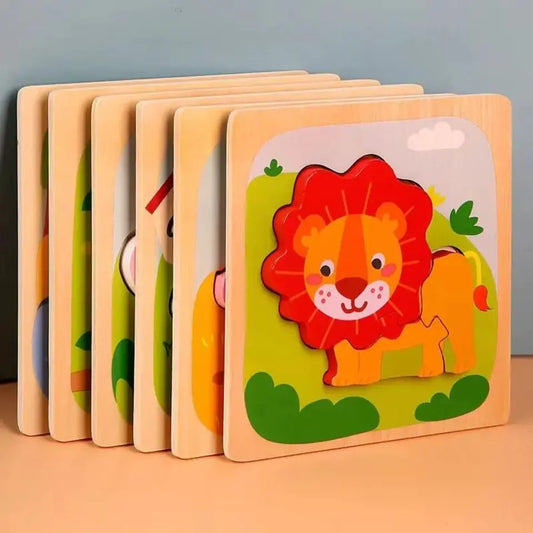
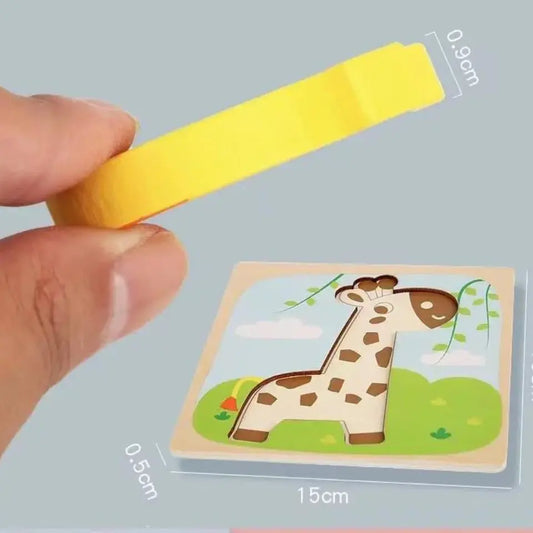
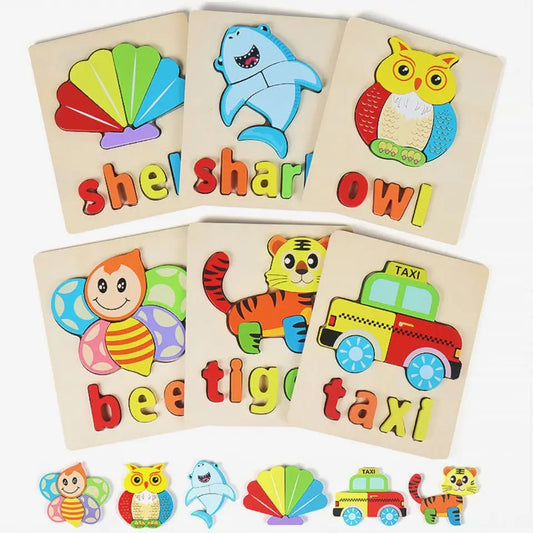
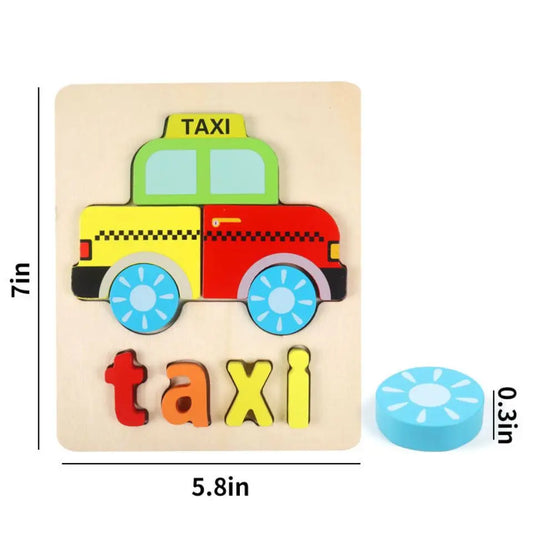
Best for toddlers and early learners because they are durable and easy to grip.
They usually have large, simple pieces that are safe and help young children start recognizing shapes and objects.
Peg Puzzles (Ages 1–4)
Excellent for developing pincer grip and fine motor control.
These puzzles are especially good for toddlers who are still learning how to pick up and place small objects accurately.
Floor Puzzles (Ages 3–5)
Ideal for active preschoolers who enjoy movement and larger visual play.
They often have big pieces that children can assemble on the floor, making them more engaging and interactive.
3D Puzzles (Ages 6+)
Best for older children who enjoy spatial reasoning and advanced challenges.
These puzzles help develop stronger problem-solving skills and the ability to think in three dimensions.
In the following sections, we will take a closer and more detailed look at each type of puzzle to better understand their benefits, how they support child development, and how to choose the right one for your child’s age and abilities.

Starting Points by Age (With Reality Checks)
Here's what typically works at each stage, but remember - your child might be different, and that's fine.
12-18 Months: Big and Simple Look for 1-3 piece puzzles with large knobs. Your toddler's learning to grasp and place pieces, not solve complex problems. Shape sorters count as puzzles at this age.
Reality check: They'll mouth these pieces. Choose wood over foam. Pieces need to be too large to swallow. If you're constantly worried about choking, the puzzle's wrong.
18 Months - 2 Years: Building Skills Move up to 3-8 piece puzzles with chunky pieces. Knob puzzles still work great. Simple shapes and familiar objects (animals, vehicles) engage better than abstract designs.
Your 2-year-old might do these puzzles 20 times in a row. That's normal. Repetition is how they build mastery and confidence.
2-3 Years: Real Problem-Solving Try 5-12 piece puzzles. You can introduce simple jigsaw puzzles with large pieces. Wooden puzzles at this age should have clear, high-contrast images that help kids see where pieces fit.
Watch for frustration. If your child's struggling, go back to easier puzzles. There's no rush. Confidence matters more than complexity.
3-4 Years: Increasing Complexity Most kids can handle 12-24 pieces by age 3, moving up to 24-48 pieces by age 4. Peg puzzles work brilliantly for developing fine motor control. The smaller pegs teach the pincer grip needed for writing.
Some 4-year-olds love floor puzzles - bigger pieces spread across the floor make assembly feel different and engaging. Our 3D wooden puzzles add spatial complexity that really challenges this age group.
5-6 Years: Growing Abilities School-age kids often jump to 60-100 piece puzzles. They're developing strategies - sorting edge pieces first, grouping by color, using the picture as reference. Let them figure out their own methods.
By age 6, some kids can tackle 100-200+ pieces if they're puzzle-lovers. Others prefer 48-piece puzzles they can finish in one sitting. Both are fine. Match the challenge to your child, not some arbitrary standard.
7+ Years: Individual Preferences Puzzle abilities vary wildly now. Some kids love 500-piece puzzles. Others prefer logic puzzles, 3D puzzles, or move away from puzzles entirely. Follow their interests.
Interest Matters as Much as Skill
A 4-year-old who's obsessed with dinosaurs will engage longer with a 48-piece dinosaur puzzle than a "more appropriate" 24-piece puzzle about something boring to them.
Use interests strategically. If your child's struggling with puzzles, grab one featuring their current obsession. Suddenly they're motivated to persist through the challenge.
Themes also support learning. Animal puzzles teach species recognition. Vehicle puzzles build vocabulary. World map puzzles introduce geography. Pick puzzles that align with what your child's naturally curious about.
Signs the Puzzle's Too Easy
Your child finishes it in under 5 minutes without any challenge. They're barely looking at the picture. They complete it while chatting about something else. They immediately ask for a harder puzzle.
Time to level up. Add 10-20 more pieces than they're currently doing. Or try a puzzle with similar piece count but more complex imagery - lots of similar colors, detailed patterns, trickier shapes.
Signs the Puzzle's Too Hard
They get frustrated within 2-3 minutes. They give up without really trying. They ask for help constantly. They avoid that puzzle completely.
Scale back. There's no shame in easier puzzles. You want puzzle time to build confidence, not destroy it. Drop back 12-24 pieces and let them experience success again.
Sometimes the imagery's the problem, not the piece count. A 48-piece puzzle with distinct color blocks might be easier than a 24-piece puzzle that's all blue sky. Consider image complexity, not just numbers.
When Your Child Hates Puzzles
Some kids just don't like puzzles. They prefer active play, building, dramatic play, or something else entirely. That's completely okay.
Before giving up completely, try:
-
Different puzzle types (magnetic puzzles feel totally different from jigsaw puzzles)
-
Doing puzzles together instead of solo
-
Different times of day (some kids focus better in the morning)
-
Fewer pieces than you think they "should" do
-
Puzzles based on their deepest interests
If they still hate it? Move on. Puzzles aren't mandatory for development. There are countless other ways to build problem-solving skills and fine motor control.
Budget-Friendly Puzzle Strategies
Quality puzzles cost $15-40 in Australia. That adds up fast if you're constantly buying new ones to maintain challenge levels.
Smart strategies:
-
Puzzle swaps with friends or playgroups
-
Rotate puzzles monthly. What's "new" becomes interesting again
-
Buy one or two quality puzzles per birthday/holiday instead of multiple cheap ones
-
Check secondhand for puzzles in good condition (inspect for missing pieces)
-
Focus on educational toys that grow with your child rather than single-use items
One 48-piece puzzle your child does 50 times is better value than five puzzles they complete once and ignore.
Puzzle Storage and Organization
Loose pieces everywhere? Here's what works:
Store completed puzzles flat in clear containers or resealable bags. Label with piece count and image so you can quickly grab appropriate difficulty levels.
For kids who do puzzles independently, store current-level puzzles within reach. Put too-easy and too-hard puzzles away. You control the available challenge without saying "no."
Missing pieces happen. Don't stress. A 23-piece puzzle works fine for practice. When pieces go missing, that's your sign to retire that puzzle and move on.
Making Puzzles Work for Your Family
The best puzzle for your child is one they'll actually do. Not the one that matches their age. Not the fancy educational one you think they should like. The one they choose and complete.
Start with your child's current ability, not where you think they should be. Success builds confidence. Confidence builds persistence. Persistence leads to harder challenges they'll tackle willingly.
Browse our puzzle collection for options across all skill levels. Look for clear images, quality construction, and piece counts that match where your child is today - not where you hope they'll be next month.
Some days your 5-year-old will choose a 12-piece puzzle because they want something easy and relaxing. That's perfectly fine. Puzzles should be enjoyable, not a test they have to pass.
Pay attention to what engages your child. The right puzzle keeps them focused for 10-30 minutes without frustration. They might need help occasionally, but they're mostly working independently and feeling proud when they finish.
That's your answer. That's the right puzzle for your child right now. And "right now" changes constantly as they grow and develop. Keep adjusting, keep watching, keep following their lead.
Common Puzzle Buying Mistakes Parents Make
- Choosing puzzles only based on age labels
- Buying overly complex images with similar colors
- Introducing too many pieces too early
- Ignoring the child’s interests
- Forcing puzzle time when the child is tired or frustrated
FAQ
1. How many puzzle pieces should a 3-year-old do?
Most 3-year-olds can comfortably complete puzzles with 12-24 large pieces depending on experience and interest.
2. Are wooden puzzles better for toddlers?
Wooden puzzles are often safer and easier for toddlers to grip because the pieces are thicker and more durable.
3. What if my child gets frustrated with puzzles?
Reduce the difficulty level slightly and choose themes your child already enjoys.
4. Can puzzles help with brain development?
Yes. Puzzles support spatial reasoning, memory, fine motor skills, and problem-solving abilities.

3 comments
Very informative post about selecting the right puzzle for kids. The section on developmental benefits of puzzles like problem-solving, fine motor skills, and spatial awareness is really valuable. I also liked the age-based guide — it makes choosing age appropriate puzzles much easier for parents.
This is such a helpful article. I’ve noticed exactly what you mentioned — my child loses interest quickly when puzzles are too easy or gets frustrated when they’re too hard. The “just right challenge” explanation really makes sense and helped me understand how to choose better puzzles.
Great guide — very clear and practical for parents. I really like how you explained that choosing the right puzzle is not just about age, but also about the child’s current ability and interests. The breakdown of puzzles by age is especially helpful for first-time parents.