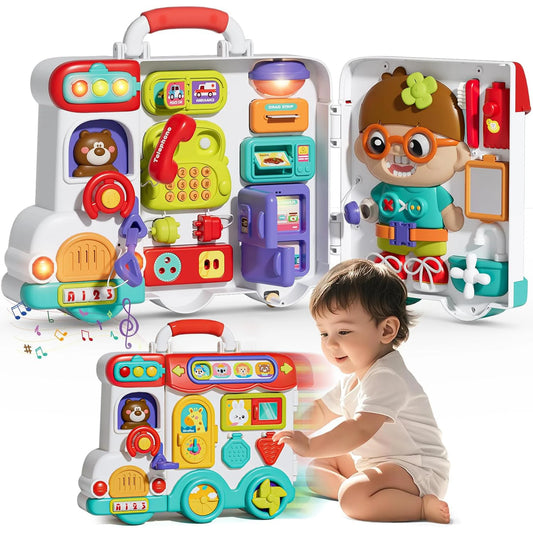
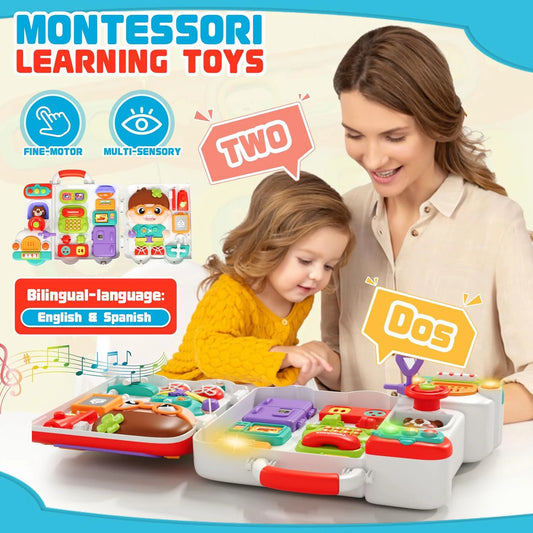
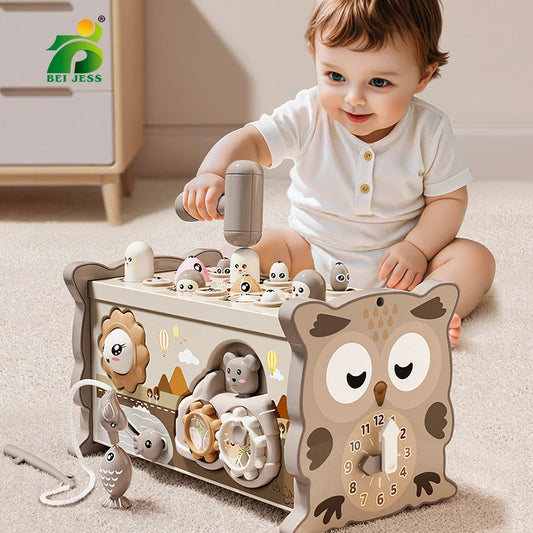
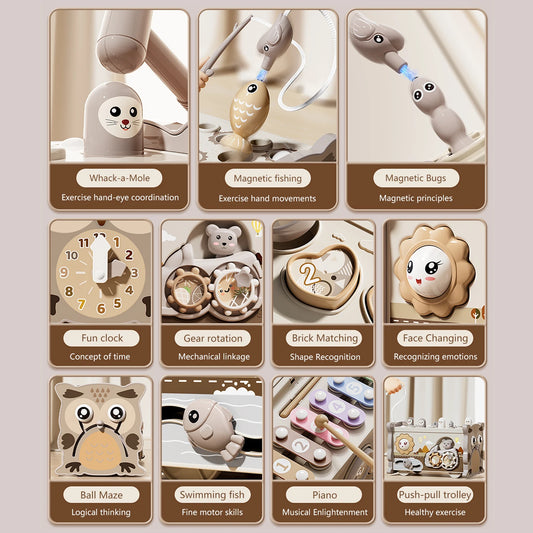

The best Montessori toys for 2 year olds are simple, hands-on toys that let toddlers practise one or two skills independently through sorting, stacking, matching, building or practical play. At this age, the right toy should be engaging without being overwhelming, easy enough to explore independently and challenging enough to encourage repetition.
This guide covers Montessori-inspired toys specifically suited to two-year-olds, whether you are choosing something for everyday play or searching for a practical birthday or Christmas gift.
| Toy Type | Skills It Encourages | Best For |
|---|---|---|
| Stacking and sorting toys | Hand-eye coordination, problem-solving | Independent play |
| Simple puzzles | Matching, visual recognition, fine motor control | Quiet play |
| Practical-life toys | Independence, coordination, imitation | Everyday learning |
| Sensory and activity toys | Fine motor control, concentration | Busy hands and travel |
| Musical toys | Listening, rhythm, cause and effect | Interactive play |
What Makes a Toy “Montessori”?
A Montessori toy generally encourages active, hands-on participation rather than simply entertaining the child. Traditional Montessori environments emphasise purposeful activity, independence, freedom to choose suitable work and materials that allow children to discover and correct mistakes themselves.
Common features include:
- A simple, understandable purpose
- Hands-on manipulation rather than passive entertainment
- A manageable challenge appropriate to the child
- Opportunities for repetition
- Open-ended or self-correcting play
- Natural or tactile materials where practical
Wood is common in Montessori toys because it is durable and tactile, but a toy does not become Montessori simply because it is wooden. The way the child interacts with the activity matters more than the material alone.
For a broader explanation, see What Is a Montessori Toy?
How Montessori Toys Support Brain Development at Age 2
At around two years old, toddlers are rapidly developing language, coordination, pretend play and their ability to manipulate small objects. They are also becoming more interested in copying adults, following simple instructions and figuring out how everyday objects work.
Raising Children Network notes that two-year-olds are typically developing skills such as combining words, following simple instructions, pretend play and handling small objects. Development varies between children, so toys should support exploration rather than be treated as a test of milestones.
The right brain development toys for 2 year old children can give them repeated opportunities to practise:
Fine motor skills: Picking up puzzle pieces, turning controls, stacking blocks and fitting objects together require increasingly precise hand movements.
Language: Naming animals, colours, objects and actions during play gives adults natural opportunities to introduce new words. Child-led play and conversation are particularly useful for supporting toddler language.
Problem-solving: A toddler might try several ways to place a shape, build a tower or operate a simple mechanism before discovering what works.
Focus: Purposeful activities that children choose themselves can encourage repetition and gradually longer periods of concentration. Montessori practice places strong emphasis on interest-led repetition rather than forcing an activity.
Best Montessori Toys for 2 Year Olds by Category
There is no single Montessori toy that every two-year-old needs. A better approach is to match the activity to what your toddler currently enjoys doing.
Always check the individual product's delivered age recommendation and small-parts warnings before giving it to a child under three.
Shape Sorters & Puzzles
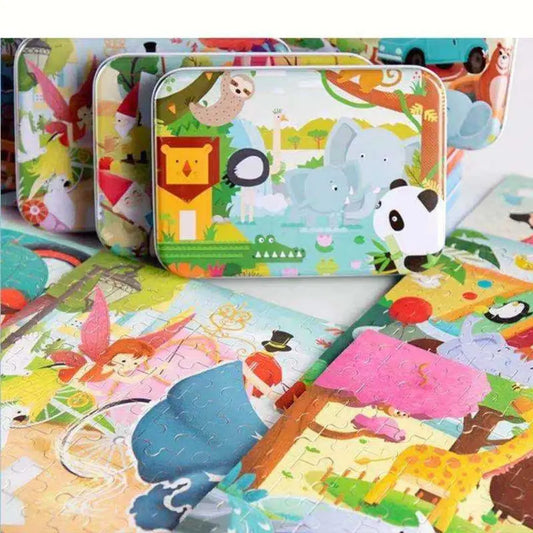
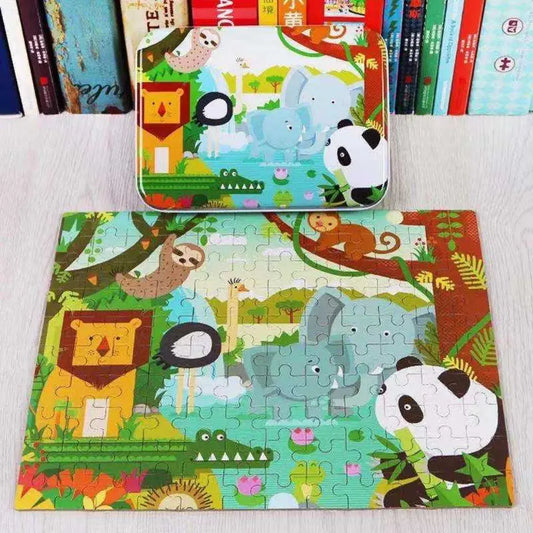
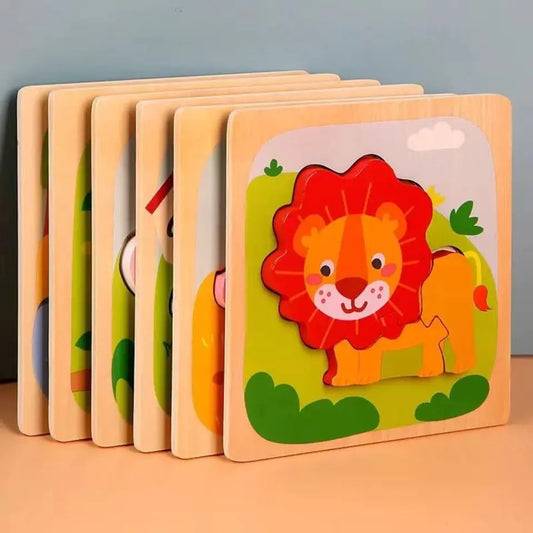
Simple puzzles and sorting toys are useful when your toddler enjoys matching objects, turning pieces or trying to work out where something belongs.
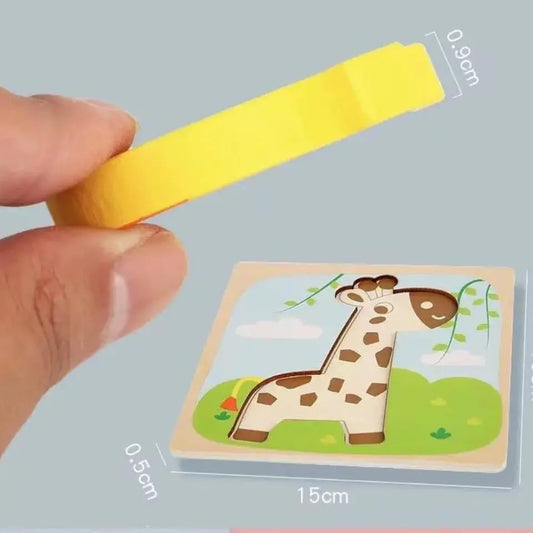
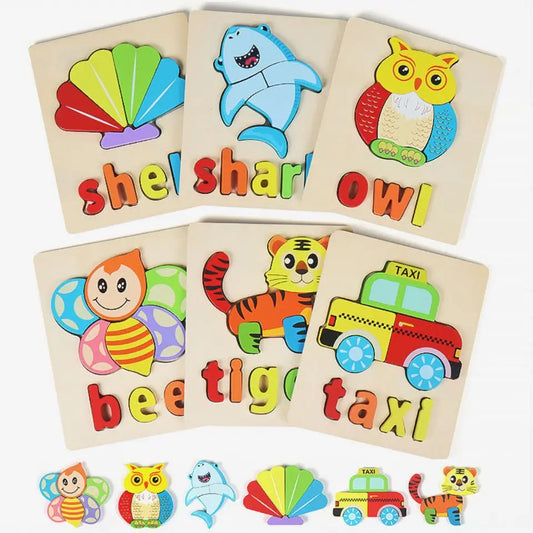
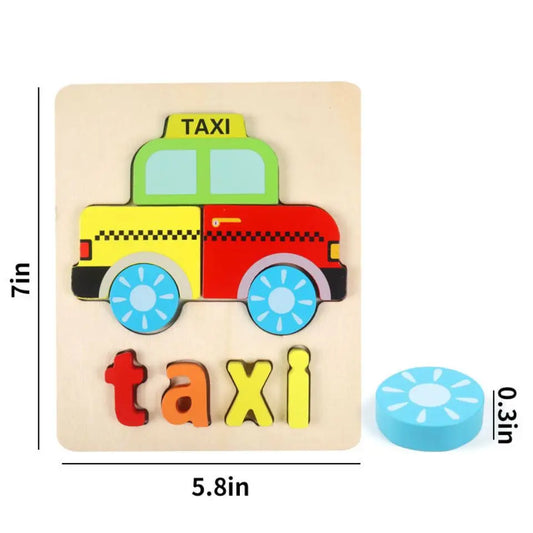
Look for puzzles with larger pieces and straightforward pictures or shapes rather than highly detailed jigsaws designed for older children. The challenge should be achievable with some effort rather than frustrating.
A good puzzle lets the child:
- Pick up and reposition pieces independently
- Compare shapes and spaces
- Rotate pieces to find the correct orientation
- Recognise familiar animals, vehicles or objects
- Repeat the same activity without needing an adult to reset everything
Toys4Us currently carries several wooden puzzle options in its Montessori collection, although individual age recommendations vary and some products may be intended for children older than two. Check the exact product listing before purchasing.
Stacking & Nesting Toys
Stacking is one of the easiest Montessori-style activities to introduce around age two.
Children can experiment with balance, size, order and spatial relationships while building and rebuilding. The activity does not require one “correct” finished result, making it suitable for toddlers who prefer experimentation.

The Montessori Wooden Train Toy with Numbers & Blocks is one current Toys4Us option designed for ages 1–5. It combines a wooden train with stackable numbered blocks, so children can push the train, rearrange the carriages and practise simple building or number play.
This type of toy is useful when you want a larger gift that can support both structured and imaginative play rather than a toy with only one short activity.
Practical Life & Pretend Play Sets
Two-year-olds often want to copy whatever adults are doing. Pretend cooking, brushing teeth, feeding toys and operating simple household-style controls can make everyday routines part of play.
Montessori practical-life activities are based on real actions children see around them. At home, this can be as simple as helping wipe a table, transferring safe objects between containers or practising familiar routines with a toy.
The Montessori Toothbrushing Teaching Aid currently available from Toys4Us is one example. It uses a visible teeth model so a child can imitate brushing movements and become familiar with the routine through supervised pretend play.
The 6-in-1 Montessori Activity Board is another option worth considering. The current listing includes manual activities such as rotating a dial, pushing switches, turning a fan and moving clock hands. The listing includes age guidance spanning 0–6 years, but parents should still follow the delivered product label and supervise children under three closely.
Sensory & Fine Motor Toys
Sensory toys are particularly useful for toddlers who enjoy touching, pulling, pressing, opening and repeating the same movement.
Fine-motor toys do not need dozens of activities. A toddler may spend much longer mastering one switch, buckle or movable piece than exploring a complicated activity centre.

Good options include:
- Posting toys
- Pulling activities
- Large switches and dials
- Simple busy boards
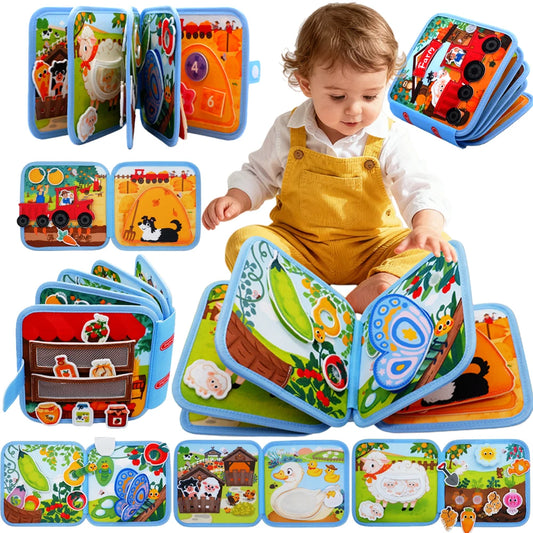
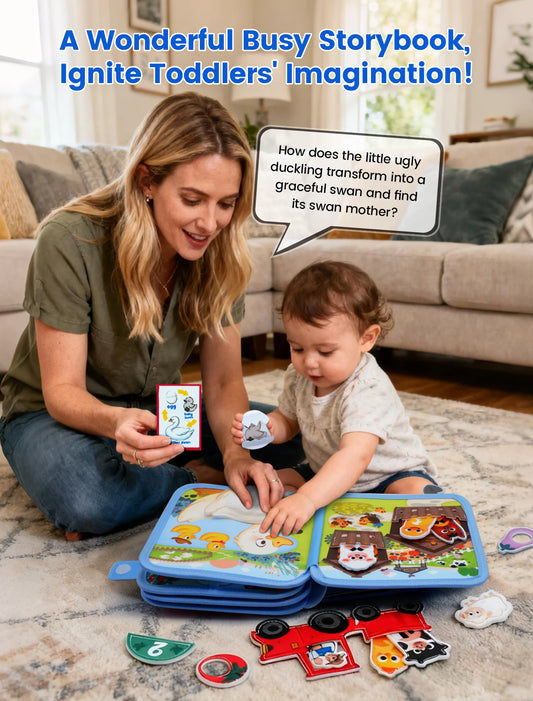
- Soft activity books
- Matching activities
- Large-piece threading or fastening activities designed for the age group
The key is choosing an activity that is safe and achievable. Toys with removable pieces, cords, fasteners or small components should always be checked carefully for under-three suitability.
Music & Instrument Toys
Music can introduce rhythm, listening and cause-and-effect play, but a Montessori-style music toy does not need constant electronic stimulation.
Simple instruments such as toddler-safe drums, shakers or xylophones allow the child to create the sound directly: hit, shake or tap something and hear the result.
Toys4Us also currently carries interactive activity cubes and musical busy boards. Some include xylophone, sound or mechanical activities, but age recommendations differ between models. For example, some current music-and-light products are explicitly marked for children aged three and above, so they should not automatically be purchased for a two-year-old.
For a two-year-old, prioritise age suitability over the number of electronic features.
Montessori Toys for a 2 Year Old Girl
The best Montessori toys for a 2 year old girl are essentially the same toys that work well for any two-year-old: stacking toys, puzzles, pretend-play activities, sensory toys and practical-life materials.
There is no developmental reason to choose entirely different categories based on gender. Instead, use colours or themes to personalise the gift.
For example, you might choose:
- Animal themes for a toddler who loves animals
- Pastel or bright colours depending on personal preference
- Cooking or household pretend play if she copies adults
- A vehicle-themed stacking toy if she loves cars and trains
- Music activities if she enjoys dancing and sound
Watch what the child already chooses during play. Interest is usually a much better guide than whether the packaging is marketed towards girls.
Montessori Toys for a 2 Year Old Boy
The same principle applies when choosing Montessori toys for a 2 year old boy.
You do not need separate “boys' learning toys”. A two-year-old who loves stacking, matching, pretending or exploring mechanisms will benefit from those activities regardless of gender.
Themes can still make a gift feel more personal. Cars, trains, animals, farms, dinosaurs, household objects or neutral wooden designs can all work depending on the child's interests.
The Montessori Wooden Train with Numbers & Blocks, for example, can be especially appealing to a toddler who already enjoys vehicles while still providing opportunities for stacking and imaginative play.
Montessori Toys vs Educational Toys — What's the Difference?
Montessori toys are best understood as one type of educational toy rather than a completely separate category.
| Feature | Montessori-Style Toy | General Educational Toy |
|---|---|---|
| Main approach | Child-led, hands-on exploration | Any toy designed to teach or practise skills |
| Number of activities | Often one clear skill or purpose | May include many activities at once |
| Adult involvement | Child gradually works independently | Varies widely |
| Electronics | Often minimal or unnecessary | Can include lights, screens and sound |
| Error feedback | Often visible through the activity itself | May rely on electronic or adult feedback |
The best educational toys for 2 year olds are not necessarily labelled Montessori. A basic set of blocks, a well-designed puzzle or a pretend kitchen tool can still provide valuable hands-on learning.
Likewise, simply placing “Montessori” in a product name does not automatically make something suitable for your two-year-old.
For more options, see Best Toys for 2 Year Old Toddlers.
How to Choose the Right Montessori Toy
When comparing toys, use a short checklist instead of choosing based only on appearance.
Check the Age Recommendation
This matters most. A toy that looks simple might contain components intended for children aged three or four.
Check both the online listing and the delivered packaging, especially for toys with removable pieces.
Choose the Right Level of Challenge
A good activity should be slightly challenging but still achievable.
If every part requires adult assistance, the toy may be too advanced. If the child completes it immediately and loses interest, it may be too easy.
Look at Materials and Construction
Check how pieces are attached, whether edges are smooth, whether finishes are suitable for children and whether anything small could become loose.
Wood can be durable, but plastic, fabric and other materials can also work well when the design is appropriate.
Prefer Toys With Replay Value
A toy that can be stacked, arranged, matched or incorporated into pretend play usually has more replay value than something with only one predetermined response.
Consider Your Budget
You do not need a large collection.
A few carefully selected activities that match the child's interests can be more useful than filling a playroom with options. Rotating toys can also make familiar activities feel fresh again.

Montessori Toy Gift Guide
Montessori-style toys are particularly useful gifts because you can choose by developmental stage rather than needing to know the child's favourite character or TV show.
Small Gifts Under $25
At the time of checking, Toys4Us has several Montessori or Montessori-inspired activity toys around or below this price range, including the 6-in-1 Activity Board at $15.99 and selected activity cubes around 13.99–20.
These can work well for smaller birthday gifts, gifts from friends or an extra Christmas present.
Mid-Range Gifts
Around the 25–50 range, you can consider larger busy boards, felt activity books and selected wooden play sets.
This price range can be useful when you want a more substantial present without buying a large play centre.
Check age guidance carefully: several current felt busy books and busy boards are intended for children aged three or above even though they appear in broader Montessori collections.
Larger Gifts
For a bigger birthday or Christmas present, choose something with several ways to play rather than simply more lights and buttons.
The Montessori Wooden Train with Numbers & Blocks is currently $52.99 and has a stated age range of 1–5 years, making it one example that can continue to offer different types of play as a toddler grows.
What If You Don't Know the Child's Interests?
Choose something simple and versatile.
Stacking, sorting and practical-life toys are usually easier gift choices than highly specific character toys because the child can interact with them in different ways.
Neutral themes such as animals, shapes, vehicles, everyday objects and simple colours are also useful when buying for someone else's child.
FAQs About Montessori Toys for 2 Year Olds
What are the best Montessori toys for a 2 year old?
The best Montessori toys for 2 year olds include simple stacking toys, shape sorters, beginner puzzles, practical-life activities, sensory toys and age-appropriate musical instruments. Choose an activity that matches what the child currently enjoys practising.
Are Montessori toys good for a 2 year old's brain development?
Montessori-style toys can provide opportunities to practise fine motor skills, problem-solving, language, coordination and concentration through hands-on play. They should be viewed as useful play materials rather than products guaranteed to produce specific developmental outcomes.
What Montessori toys suit a 2 year old girl?
Stacking toys, puzzles, practical-life sets, sensory activities and pretend-play toys can all suit a two-year-old girl. Choose colours and themes according to her interests rather than restricting the type of toy based on gender.
What Montessori toys suit a 2 year old boy?
The same categories work well for boys: puzzles, stacking toys, practical-life activities, vehicles, sensory toys and simple musical toys. Match the theme to the child's interests.
What's the difference between Montessori toys and regular educational toys?
Educational toys are any toys intended to support learning or skill development. Montessori-style toys are a subset that generally emphasise purposeful, hands-on, child-led activity, independence and simple challenges.
How many Montessori toys does a 2 year old need at once?
There is no fixed number. A small selection of accessible toys is often enough. Try offering a few different activities and rotating them when the child loses interest rather than displaying every toy at once.
Find the Best Montessori Toys for Your 2 Year Old
Choosing the best Montessori toys for 2 year olds is less about buying the most complicated educational toy and more about finding an activity your child is ready to explore independently.
Start with simple puzzles, stacking activities, practical-life toys or sensory play, then watch what your toddler repeats. That interest is often the clearest sign of what to offer next.
Explore the Montessori Toys Australia collection to compare current stacking toys, busy boards, puzzles and other hands-on learning activities. Whether you are shopping for your own toddler or choosing a birthday or Christmas present, always check the individual age recommendation and safety guidance before ordering.