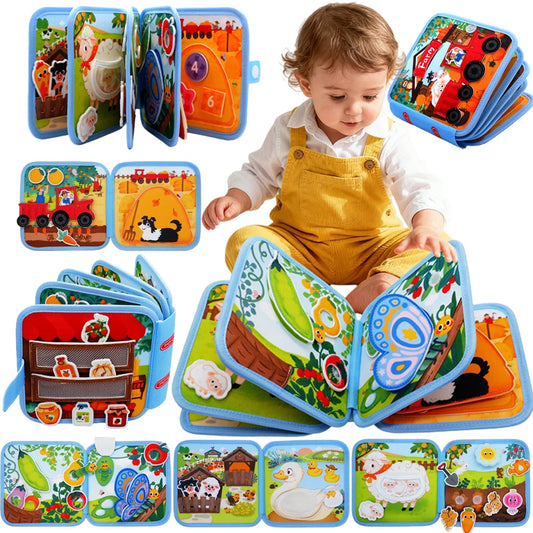
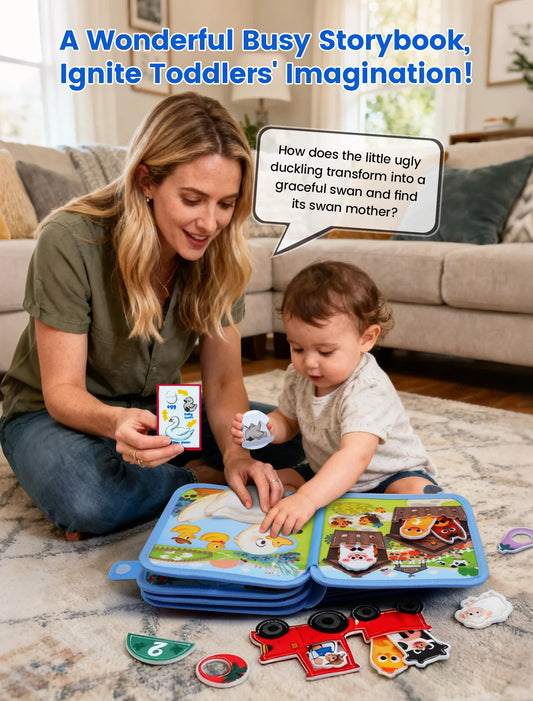
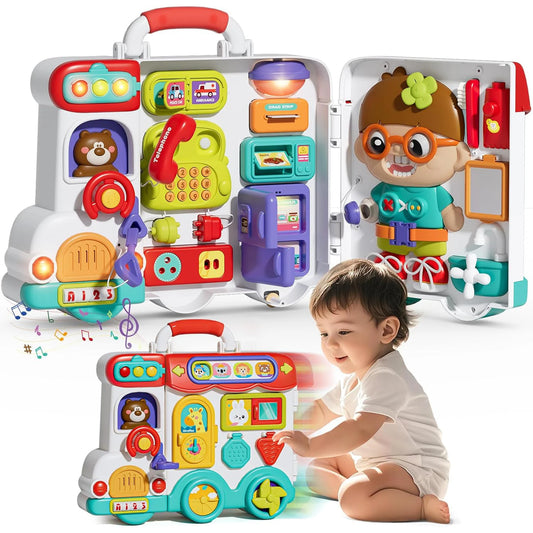
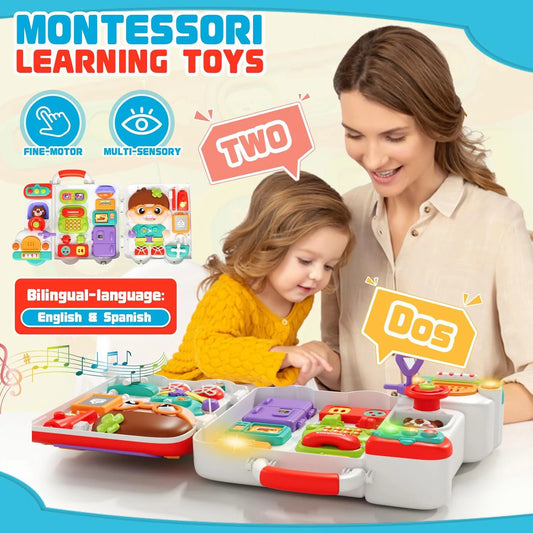
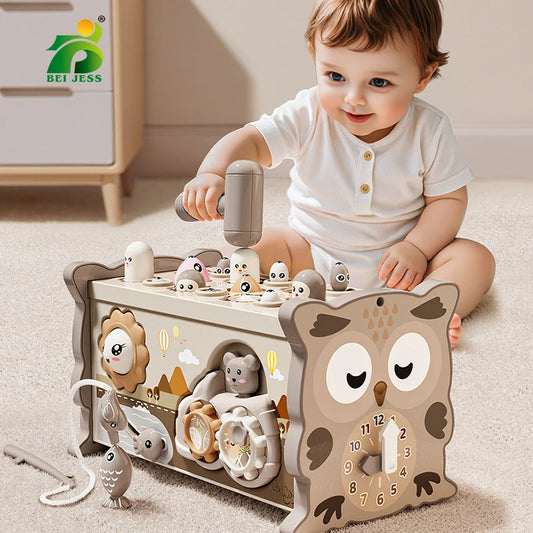

If you are wondering what are busy boards, the simplest answer is that they are hands-on activity toys fitted with elements children can manipulate. A child may turn a wheel, move a slider, open a latch, press a switch, fasten a buckle or explore different textures. Busy boards are also called activity boards or sensory boards, although designs vary.
They come as wooden panels, felt books, activity cubes, wall-mounted panels and electronic switch boards. The right choice depends on the child’s age, abilities and interests, as well as the product’s construction. Manufacturer age grading and safety information should always take priority over marketing labels such as “baby”, “toddler” or “Montessori”.
What Are Busy Boards? The Quick Answer
- A busy board is a hands-on toy containing securely attached activities that children can open, close, turn, slide, press, fasten or explore. Common formats include flat boards, foldable felt books, cubes, activity houses, wall panels and electronic boards.
- Activities range from simple movements to multi-step fasteners and matching tasks, so no single busy board suits every age.
How Does a Busy Board Work?
Children interact with physical elements by turning, pulling, sliding, pressing, opening, closing, buckling, zipping or matching. The board then provides immediate feedback: a latch opens a door, a wheel rotates, a zip moves or a switch activates a light.
This gives children opportunities to repeat movements and explore simple cause and effect without implying guaranteed developmental improvement. Families interested in broader hands-on learning can also read A Guide to Montessori Toys for Toddlers in Australia.
Related Product
Busy Board, Activity Board and Sensory Board: What Is the Difference?
A busy board is a broad term for an interactive activity panel. An activity board often emphasises tasks or mechanisms, while a sensory board may focus more on textures, sounds and lights. A busy book is usually soft and foldable, while an activity wall is a larger fixed format. These are descriptive terms, not formal safety classifications.
Are Busy Boards Montessori Toys?
Many are marketed as Montessori-inspired because they encourage hands-on, self-directed exploration. However, “Montessori” is not a safety certification. A simple board that isolates one practical movement may fit Montessori principles more closely than a crowded design, but age grading, construction and quality remain more important. See A Guide to Montessori Toys for Toddlers in Australia for more context.
What Elements Can a Busy Board Include?
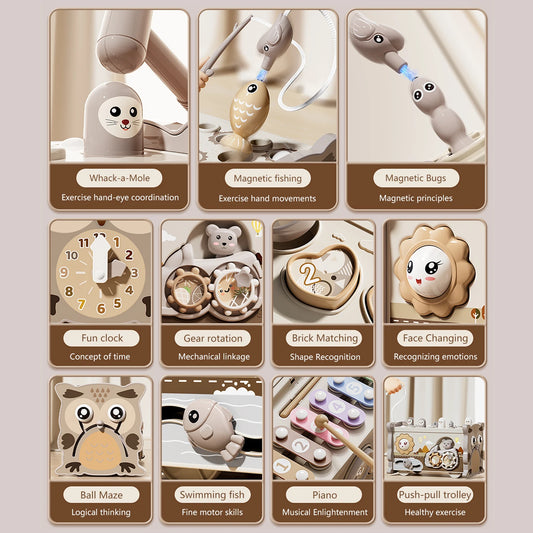
Common busy board elements include fasteners, mechanical parts, sensory materials, matching tasks and practical-life activities.

The best combination depends on age, component size and secure attachment. Parents can explore the Busy Board range after identifying suitable activities.
| Element category | Examples | What children can explore | What parents should check |
|---|---|---|---|
| Fasteners | Zips, buckles, buttons, laces | Opening and fastening | Attachment, size, cord length |
| Mechanical | Wheels, sliders, gears, latches | Turning and movement | Hardware, sharp edges |
| Sensory | Textures, fabrics, sounds, lights | Tactile and visual exploration | Peeling materials, batteries |
| Matching | Shapes, colours, animals, numbers | Sorting and matching | Removable pieces |
| Practical | Doors, locks, switches, handles | Everyday movements | Pinch points, construction |
Fasteners and Practical-Life Activities
Zips, buttons, buckles, snaps, belts, laces and simple locks introduce familiar fastening actions. Difficulty matters: small buttons or complex lacing may be too challenging for younger children, while long cords and detachable zipper pulls require extra inspection.
Switches, Wheels, Sliders and Cause-and-Effect Elements
Toggle switches, buttons, wheels, gears, tracks, doors and spinners give direct physical feedback. Check for secure attachment, exposed screws, sharp edges and pinch points. On powered boards, also inspect wiring and battery compartments.
Textures, Colours and Sensory Elements
Boards may combine felt, wood, textured fabrics, mirrors, lights, bells, colours and shapes. Check for loose mirrors, peeling materials, rough surfaces and excessive volume. These features provide sensory experiences but should not be presented as guaranteed treatment for sensory difficulties.
Letters, Numbers, Shapes and Matching Activities
Letters, numbers, matching pieces and simple sorting tasks may suit older toddlers and preschoolers. Check the size of removable pieces and activity difficulty, and remember that exposure to letters or numbers does not guarantee literacy or numeracy outcomes.
What Are the Different Types of Busy Boards?
Busy boards vary by material and format. Comparing the main styles can help parents choose a portable, home or fixed option.
| Type | Main advantage | Main consideration |
|---|---|---|
| Wooden board | Firm surface and tactile hardware | Weight, edges, splinters, screws |
| Felt busy book | Lightweight and foldable | Stitching, removable pieces |
| Cube or house | Several activity surfaces | Bulk, stability, hinges |
| Wall-mounted board | Saves floor space | Installation and hardware |
| Electronic board | Light or sound feedback | Batteries, volume, durability |
Wooden Busy Boards
Wooden boards provide a firm base for tactile mechanisms and may be durable. Check weight, smooth edges, splinters, exposed hardware and cleaning instructions rather than assuming wood is automatically safer.
Felt Busy Books
Felt busy books are lightweight, foldable and convenient for quiet play or travel. Inspect stitching, buttons, hook-and-loop pieces and laces, and follow the manufacturer’s washing and drying instructions.
Busy Board Cubes and Activity Houses
Cubes and houses offer activities on several surfaces. Consider stability, weight, handles, hinges, storage and whether any components can detach during normal play.
Wall-Mounted Activity Boards
Wall-mounted boards save floor space but require secure adult installation. Use suitable fixings, follow the manufacturer’s instructions and position the panel at the recommended height.
Electronic and Light-Up Busy Boards
Electronic boards use switches, lights and sounds for clear cause-and-effect feedback. Check battery security, wiring, sound controls and durability, and consider whether the electronic features add meaningful play value.
What Are the Potential Busy Board Benefits?
The most balanced way to discuss busy board benefits is as play opportunities, not guaranteed outcomes. A suitable board can provide hands-on practice and another non-digital play option. See Encouraging Sensory Exploration and Motor Skills by Montessori Toys for related ideas.
Fine Motor Practice
Turning, pinching, gripping, fastening and sliding involve small hand and finger movements, so a busy board can provide opportunities to practise them. For other options, compare Best Educational Toys Under $50. A busy board alone does not teach writing or independent dressing.
Hand-Eye Coordination
Moving a slider, lining up a matching piece or reaching for a latch requires children to visually follow an element while guiding their hand towards it. Activities should be challenging enough to engage without being unnecessarily difficult.
Cause-and-Effect Exploration
Pressing, spinning, switching or opening can create an immediate result, helping children explore simple cause and effect. These responses are part of play and should not be overstated as proof of cognitive improvement.
Problem-Solving and Persistence
Some mechanisms require children to change their grip, direction or pressure before they work. Tasks that are challenging but achievable may encourage repeated attempts, while activities far beyond the child’s abilities can create frustration.
Practical-Life and Dressing Activities
Zips, buckles, buttons, snaps and laces resemble movements used when dressing. A busy board can introduce these actions, but independent dressing develops over time and still requires practice with real clothing and routines.
Independent and Screen-Free Play
Busy boards can offer a non-digital activity for children who enjoy manipulating physical objects. Independent play time varies greatly, so avoid products promising a fixed amount of quiet play. Best Toddler Toys Under $50 provides alternatives for children with different interests.
Are Busy Boards Worth It?
So, are busy boards worth it? They may be when activities match the child’s age and interests, construction is durable and the board will be used regularly. They may offer poor value when activities are too easy, too difficult, poorly attached or quickly outgrown.
| May be worth it when | May not be worth it when |
|---|---|
| Activities suit the child | Most are too difficult |
| Components are secure | Pieces loosen or get lost |
| The child enjoys mechanisms | The child shows little interest |
| It suits home or travel | It is too heavy or bulky |
| Activities offer progression | It is quickly outgrown |
| Construction justifies price | Claims are exaggerated |
When a Busy Board May Be Worth Buying
It may suit a child who repeatedly enjoys latches, switches, fasteners or opening and closing objects. Durable construction, several relevant activities and the ability to use it at home or while travelling can improve its practical value.
When a Busy Board May Not Be the Right Choice
Avoid products with unclear age guidance, weak components, too many removable pieces or activities far beyond the child’s abilities. A child who prefers active, construction or imaginative play may get better value from alternatives in Best Toddler Toys Under $50.
What Age Are Busy Boards For?
There is no universal busy board age. Manufacturer age grading, construction and component size should take priority over broad marketing labels. A simple age comparison can still help parents understand how activity difficulty may progress.
| Age/stage | General activity characteristics |
|---|---|
| Babies | Large textures, flaps, secure simple elements |
| One-year-olds | Large switches, sliders, wheels |
| Two-year-olds | Zips, large buckles, matching, simple latches |
| Ages 3–6 | Multi-step tasks, letters, numbers, sequencing |
Busy Boards for Babies
Only consider products specifically intended and age-graded for babies. Mouthing behaviour makes large, secure components and cleanable surfaces especially important. Product Safety Australia advises choosing sturdy, age-appropriate toys and avoiding detachable small parts for babies and young toddlers.
Busy Boards for One-Year-Olds
Simple sliders, large switches, wheels and easy opening actions may be more manageable than complex dressing tasks. Do not use a 3+ board merely because its title says “toddler”. See Choosing the Best Toys for 1 Year Old Toddlers for more age-specific ideas.
Busy Boards for Two-Year-Olds
Two-year-olds may be ready for large buckles, zips, matching and simple latches. Look for achievable progression rather than a board crowded with difficult mechanisms. Compare other options in Best Toys for 2 Year Old Toddlers.
Busy Boards for Children Aged 3–6
Older toddlers and preschoolers may engage with multi-step fasteners, sequencing, matching, letters and numbers. Product-specific age guidance still matters, especially when removable pieces, magnets or batteries are included.
How to Choose the Right Busy Board
When deciding what is a busy board for kids worth buying, focus on whether the activities fit the child rather than how many are included. Check age grading, difficulty, component size, materials, construction, portability, cleaning, batteries and removable pieces. Use these criteria when comparing the Busy Board range.
Check the Manufacturer’s Age Grading
Packaging and official specifications should take priority over general online advice. In Australia, toys intended for children up to and including 36 months are covered by a mandatory standard designed to reduce risks from small parts releasing during play or reasonable wear.
Match the Activities to the Child’s Abilities
Look for achievable challenge. Very simple activities may be ignored, while mechanisms that constantly require adult help may be frustrating. A smaller set of relevant activities can be more useful than a crowded board.
Compare Size, Weight and Portability
Consider lap use, floor use, wall installation, storage and travel. The board should be stable in its intended setting and manageable for the adult to store or carry.
Check Materials and Construction
Inspect wood, felt, plastic, metal hardware, stitching, paint, finishes, screws, magnets and batteries where relevant. No material is automatically best; secure construction and age suitability matter more than a “wooden” or “Montessori” label.
Busy Board Safety Checklist for Australian Families
Australian families should assess each product individually. Product Safety Australia advises choosing sturdy, age-appropriate toys and checking for detachable parts, sharp edges, splinters and long cords. It notes that cords, ribbons, threads or elastic longer than 22 cm can create strangulation risks.
Magnets and button batteries require extra care. Australian mandatory standards cover toys containing magnets and button-battery products. Product Safety Australia advises keeping small strong magnets away from babies and toddlers and checking that button-battery compartments are child resistant and remain secure. See Are Montessori Toys Safe for Babies? for related safety guidance.
Safety Checks Before Buying
Check the stated age range, sturdy construction, smooth edges and secure components. Look for accessible screws, magnets, small pieces or long cords. For electronic boards, inspect battery security and warning information, and check whether the product has been recalled.
Safety Checks Before Every Play Session
Gently test components, inspect screws and stitching, look for cracks or splinters and confirm battery covers remain secure. Stop using the board if anything breaks, loosens or exposes hardware. Regular checks matter because wear can create new hazards.
How to Introduce a Busy Board
Inspect the board, demonstrate one simple activity and let the child repeat it before adding another. Use simple action words such as “push”, “turn”, “open” and “close”, offer help before frustration becomes excessive and follow the product’s supervision instructions.
Frequently Asked Questions About Busy Boards
What Is a Busy Board for Kids?
It is an activity toy with securely attached elements children can manipulate, such as switches, latches, sliders, textures or fasteners. Formats and age suitability vary.
What Is an Activity Board?
An activity board is a general term for a panel containing hands-on tasks. In children’s toys, it is often another name for a busy or sensory board.
Are Busy Boards Good for Toddlers?
An age-appropriate board can provide hands-on play opportunities, but its value depends on the child’s interests, activity difficulty and construction.
Can Babies Use Busy Boards?
Yes, but only when the specific product is designed and age-graded for babies. Check small-parts risks, construction and supervision guidance.
How Many Elements Should a Busy Board Have?
There is no ideal number of busy board elements. A smaller set of useful activities can be better than a crowded board filled with difficult or irrelevant mechanisms.
Are Wooden or Felt Busy Boards Better?
Neither is universally better. Wooden boards are usually firmer and heavier; felt boards are typically lighter and more portable. Construction, cleaning and age suitability matter more.
Are Electronic Busy Boards Worth It?
They can be when lights or sounds add meaningful interaction. Compare battery security, volume, durability and price before deciding.
Can Children Use Busy Boards Without Supervision?
Follow the manufacturer’s instructions. Age, batteries, magnets, removable components, wear and the way the child uses toys should guide supervision.
Can Parents Make Their Own Busy Board?
DIY boards require careful decisions about component size, attachment, hardware, finishes, cords, magnets and batteries. Familiar household parts are not automatically safe when converted into a child’s toy.
Is a Busy Board Right for Your Child?
The answer to what are busy boards goes beyond the definition: they are highly variable activity toys, so suitability depends on both the child and the specific product. Start with age grading, choose achievable activities, inspect construction, consider storage and portability, and compare the price with likely use.
A busy board can be worthwhile for a child who enjoys switches, latches, fasteners and hands-on mechanisms, but it is not essential and cannot guarantee developmental outcomes. If the format suits your child, compare Busy Board options by age, activities, materials and safety rather than simply choosing the one with the most features.