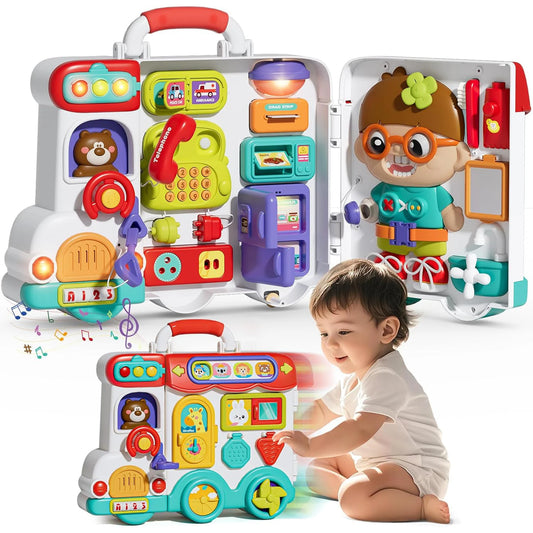
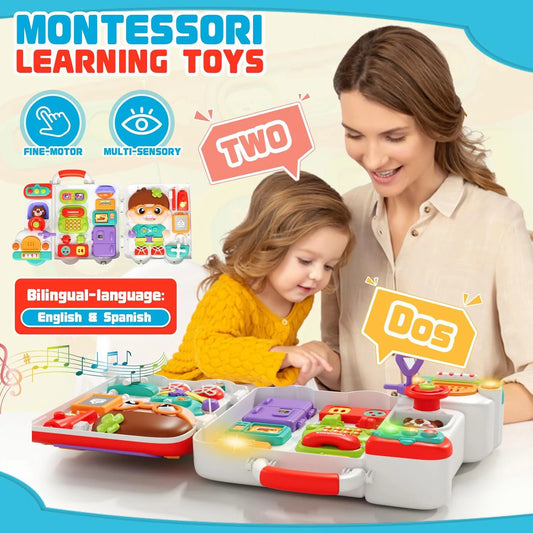
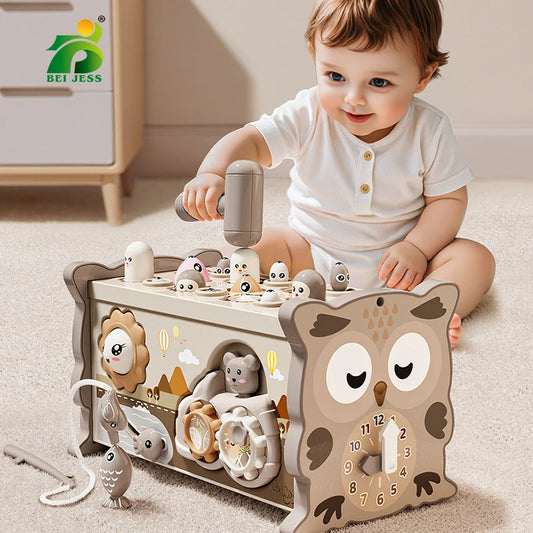
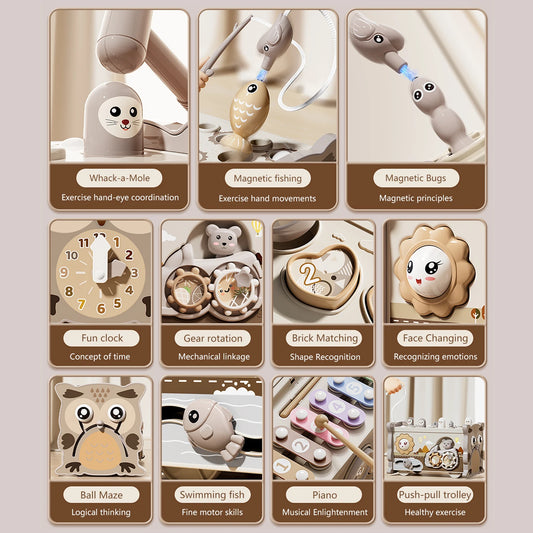

Busy boards can keep little hands occupied with everyday actions such as turning, pulling, opening, closing and fastening. However, choosing one is not simply a matter of finding the board with the most activities. The right choice depends on your child’s age, abilities, the difficulty of the activities and, most importantly, the product’s stated age grading and construction.
This guide explains the typical busy board age range, what different ages may enjoy, how to compare felt, wooden and electronic designs, and what Australian parents and carers should check before buying. Because children develop at different rates, the ages below should be treated as general guidance rather than fixed developmental rules.
What Age Are Busy Boards For? The Quick Answer
- So, what age are busy boards good for? Many busy boards are designed for children somewhere between the later baby months and the preschool years, but there is no universal starting age. Some simple sensory boards may be suitable from around six months if the manufacturer specifically permits that age, while other products are designed only for toddlers aged one, two, three or older.
- The most useful way to think about busy board age is to match three things: the manufacturer’s age grading, the safety of the components and the child’s current abilities. Younger children generally need large, simple, securely attached features, while older toddlers and preschoolers may enjoy zips, buckles, locks, matching activities and multi-step problems. Extra care is particularly important for children under three because small detachable parts and accessible batteries can create serious hazards.
What Is a Busy Board?
A busy board is a hands-on activity toy containing objects children can manipulate. Depending on the design, it may include latches, wheels, sliders, switches, doors, buckles, buttons, zips, flaps, gears or simple puzzles. The terms busy board, activity board and sensory board for toddlers are often used interchangeably, although individual products can be very different.
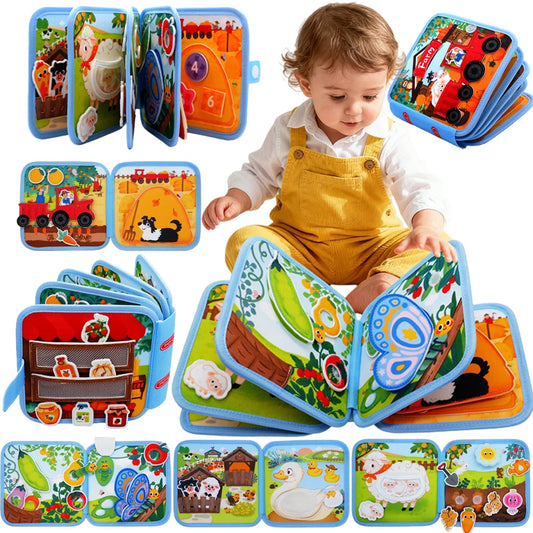
Some busy boards are solid wooden panels designed mainly for home play, while others are soft felt books that fold into a bag for travel. Electronic versions may include lights, buttons or sounds. Because each design contains different components, materials and mechanisms, parents should never assume that two busy boards have the same recommended age simply because they look similar.
Related Product
Busy Boards by Age: From Babies to Preschoolers
The most suitable activities usually become more complex as children gain better hand control and become interested in solving simple problems. A baby might explore textures and large flaps, while an older toddler may want to operate buckles, zips and doors independently.

This table gives a practical overview of the typical busy board age range. It is only a general comparison; the age stated by the manufacturer should always take priority.
| Approximate stage | Suitable activity characteristics | What parents should check |
|---|---|---|
| 6–12 months | Large textures, flaps and simple cause-and-effect features | Manufacturer permits this age; no loose or small parts; easy to clean |
| 1–2 years | Large switches, simple latches, pulling and turning activities | Secure attachments, sturdy construction and manageable resistance |
| 2–3 years | Zips, buckles, matching, sequencing and varied mechanisms | No damaged fastenings, hazardous cords or accessible batteries |
| 3–6 years | Multi-step tasks, dressing skills, numbers, letters and puzzles | Activities remain interesting without becoming unnecessarily frustrating |
Busy Boards for Babies Aged 6–12 Months
There is no single baby busy board age that applies to every product. A baby who can play comfortably in a stable position may enjoy touching different textures, lifting large flaps or operating an easy wheel or slider. At this stage, activities should generally be simple enough to explore without requiring precise finger movements.
Babies commonly explore objects with their mouths, so securely attached components are especially important. Avoid assuming that a busy board is suitable simply because its features appear large. Check the manufacturer’s minimum age and instructions, examine the board for loose pieces and supervise play closely.
Busy Boards for 1-Year-Olds
A busy board for 1 year old children can focus on basic actions such as grasping, turning, pulling and opening. Large wheels, simple switches, flaps and easy latches can provide satisfying cause-and-effect experiences, and one-year-olds may happily repeat the same action many times.
The best activities are generally simple enough for the child to achieve while still requiring some effort. Avoid boards with detachable accessories, overly difficult locks or components that become loose when repeatedly pulled.
Busy Boards for 2-Year-Olds
A busy board for 2 year old children can usually include a wider mix of practical activities. Many toddlers at this stage are interested in zips, larger buckles, doors, simple matching tasks, turning mechanisms and features that imitate everyday routines.
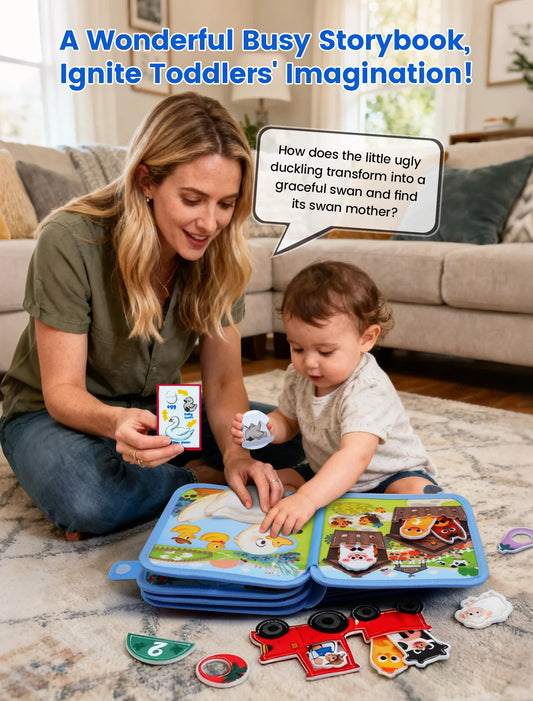
Look for a balance between success and challenge. Activities that are far too easy may quickly lose their appeal, while complicated mechanisms can cause frustration. Lightweight felt boards can also be convenient for quiet play during flights, car trips or waiting periods when portability matters.
Busy Boards for Children Aged 3–6 Years
Reaching a busy board age 3 does not automatically mean a child has outgrown activity boards. Preschoolers may still enjoy them when the activities become more sophisticated, particularly if the board includes dressing skills, sequencing, matching, early numbers, letters or multi-step mechanisms.
However, the reverse should never be assumed. A complex board specifically designed for children aged three to six should not automatically be given to a baby or younger toddler. The activities and construction may have been designed with an older child’s abilities and behaviour in mind.
How Do You Know Your Child Is Ready for a Busy Board?
Rather than relying only on age, watch how your child currently plays. Useful signs include intentionally reaching for objects, grasping and manipulating toys, showing curiosity about opening or closing things and spending a short period trying to work out a simple action.
Your child should also be able to use the board in an appropriate stable position and interact with its parts without constantly trying to detach or aggressively chew them. If lights, sounds or a large number of activities seem overwhelming, a simpler design may be more enjoyable. These are practical observations about play, not medical or developmental milestones.
How to Choose an Age-Appropriate Busy Board
A good toddler busy board is not necessarily the one with the largest number of gadgets. Consider whether the activities match your child’s current abilities, how securely everything is constructed and whether the board is practical for the location where you expect to use it.
Also think ahead without buying too far beyond the child’s abilities. A few activities that provide a manageable challenge can be more useful than a complicated board filled with mechanisms the child cannot operate.
Check the Manufacturer’s Age Grading
Always check the age recommendation printed on the product, packaging or instructions. General online statements such as “busy boards are suitable from six months” cannot replace the manufacturer’s grading for the individual product.
Different boards use different hardware, fabrics, accessories, batteries and moving parts. A board intended for a two-year-old may therefore be very different from one designed for preschoolers, even if both are marketed as busy boards.
Match the Activities to Your Child’s Abilities
For younger children, look for large and easy-to-operate activities such as flaps, wheels, sliders and straightforward switches. As children become more capable, they may enjoy zips, buckles, simple locks, matching exercises and multi-step actions.
Aim for activities that require a little persistence but are still achievable. The goal is not to make the board deliberately difficult; it is to give the child opportunities to experiment, repeat an action and gradually become more independent with it.
Compare Felt, Wooden and Electronic Busy Boards
The material and format can significantly change how a busy board is used. A travel-friendly felt model has different strengths from a heavy wooden activity board, while an electronic model introduces additional battery and sound considerations.
| Type | Advantages | Considerations |
|---|---|---|
| Felt busy board | Lightweight, portable and useful for travel | Check stitching, detachable pieces, elastic and cords |
| Wooden busy board | Stable, tactile and often durable | Check edges, splinters, hardware and overall weight |
| Electronic/light-up board | Clear cause-and-effect feedback | Check volume, battery type and secured battery compartment |
| Busy-board cube or house | Multiple activity surfaces | Check stability, hinges, corners and removable accessories |
Consider Where the Busy Board Will Be Used
For home use, a larger wooden board or activity cube may be practical because weight and storage are less restrictive. For a car, aeroplane or waiting room, a lighter felt board may be easier to carry and less likely to create excessive noise.
Childcare and shared sibling environments require additional thought. Consider how easily the board can be cleaned, whether it contains loose accessories and whether younger siblings could access components intended for older children. A board that works perfectly for supervised one-to-one play may not be equally practical in every setting.
Busy Board Safety Checklist for Australian Families
Busy board safety starts with choosing a product that matches your child’s age and checking it regularly for wear or damage. This is particularly important for children under three, who are more likely to put objects in their mouths. In Australia, toys intended for children up to and including 36 months are subject to mandatory safety requirements concerning small parts and other hazards. Parents should follow the manufacturer’s age grading and instructions rather than assuming that every busy board is suitable for the same age group.
Before each use, check:
- Age grading: Confirm it suits your child’s age.
- Small parts: Check for loose or detachable pieces.
- Edges: Look for sharp, rough or damaged areas.
- Hardware: Make sure screws and fittings are secure.
- Cords: Check straps, ribbons and elastic for damage.
- Batteries: Ensure the compartment is securely closed.
- Damage: Stop use if parts become broken or loose.
- Cleaning: Follow the product’s care instructions.
- Recalls: Check Australian safety recalls when needed.
- Supervision: Follow the recommended supervision guidance.
What Skills Can Busy-Board Play Encourage?
So, are busy boards good for toddlers? They can provide useful opportunities to practise grasping, turning, pulling, pinching and simple hand-eye coordination. Other potential busy board benefits for toddlers include cause-and-effect exploration, persistence and simple problem-solving.
Activities such as zips, buckles and buttons can also introduce dressing-related practice. Parents can add value by naming actions such as “open”, “close”, “turn” and “pull”, demonstrating a feature and then giving the child time to try independently. These are play opportunities, not guaranteed developmental outcomes.
How to Introduce a Busy Board to Your Child
Start with only a few activities rather than showing every feature immediately. Demonstrate one movement slowly and allow your child time to repeat it before helping.
A simple approach is:
- Introduce two or three activities.
- Demonstrate one action.
- Let the child try independently.
- Help if frustration builds.
- Use simple words such as “open” and “pull”.
- Revisit activities as abilities change.
- Stop if the board is being bitten or thrown.
- Inspect it before storing.
Frequently Asked Questions About Busy Board Ages
Can a 6-Month-Old Use a Busy Board?
Are busy boards good for babies at six months? Some may be, but only when the individual product is specifically age-graded for that stage. Suitable features should generally be large, simple and securely attached.
Because babies frequently mouth toys, avoid accessible small parts and supervise closely. Never assume that every busy board is suitable from six months.
Are Busy Boards Safe for One-Year-Olds?
Parents asking are busy boards safe for 1 year olds should consider the individual product rather than the toy category as a whole. Correct age grading, secure components and sturdy construction are essential.
Check regularly for loose fittings, sharp areas or damaged parts. Battery-powered features should also have a secure compartment that the child cannot access.
What Is the Best Busy Board for a One-Year-Old?
The best busy board for 1 year old children usually contains simple, repeatable activities such as large switches, flaps, wheels, sliders or easy latches.
Suitability matters more than the total number of activities. A simpler board that matches the child’s abilities may be more useful than one containing many difficult mechanisms.
What Activities Should a Busy Board for a Two-Year-Old Include?
An activity board for 2 year old children might include zips, large buckles, simple latches, matching activities, wheels and sliders.
Look for tasks that offer a small challenge while remaining achievable. Individual ability and the manufacturer’s age grading should guide the final choice.
Do Three-Year-Olds Still Enjoy Busy Boards?
Yes. Many three-year-olds continue to enjoy busy boards when the activities include dressing practice, puzzles, matching, sequencing or multi-step features.
Very basic boards may become less interesting once the child has mastered all the activities, so more advanced designs may work better at this stage.
When Do Children Outgrow Busy Boards?
There is no fixed answer to when do children outgrow busy boards. Interest usually decreases when the activities become too simple or repetitive.
A basic toddler board may be outgrown earlier, while a more advanced board with dressing tasks and puzzles can remain engaging through parts of the preschool years.
Are Wooden or Felt Busy Boards Better?
There is no universal winner in the wooden busy board vs felt busy board comparison. Felt boards are generally lighter and easier to carry, while wooden boards provide a firmer surface.
Choose based on age grading, construction quality, portability and the types of activities your child enjoys.
Are Electronic Busy Boards Suitable for Toddlers?
An electronic busy board for toddlers can provide simple feedback through lights, sounds and buttons, but parents should check the stated age range, volume and construction.
Battery compartments should remain securely closed and inaccessible during play. Stop using the product if the casing or compartment becomes damaged.
Are Busy Boards Montessori Toys?
Some busy boards are described as Montessori-inspired because they include practical, hands-on activities and encourage independent exploration. However, not every busy board follows Montessori principles.
So, what age are Montessori busy boards for? There is no universal age. Parents should still check the individual product’s age grading, components and difficulty.
How Long Should a Toddler Play With a Busy Board?
There is no required play duration. Some toddlers may spend several minutes repeating one activity, while others move on quickly.
Follow your child’s attention and stop when they lose interest, become frustrated or begin using the board unsafely.
Can a Child Use a Busy Board Without Supervision?
Parents should follow the supervision instructions supplied with the individual product. Younger children may require closer supervision, particularly with boards containing cords, fastenings, lights or electronic parts.
Regular inspection remains important even when the child has used the board safely before.
Choosing the Right Busy Board for Your Child
Choosing the right busy board starts with age grading, but your child’s abilities, activity difficulty, construction and intended use are equally important. Look for features that provide a manageable challenge without overwhelming or frustrating the child.
Once you know what suits your child, you can compare options in the Busy Board collection or explore Best Toddler Toys Under $50, Best Educational Toys Under $50, Choosing the Best Toys for 1 Year Old Toddlers and Are Montessori Toys Safe for Babies? The best busy board is not necessarily the biggest or most complicated one—it is the one that best matches the child using it.