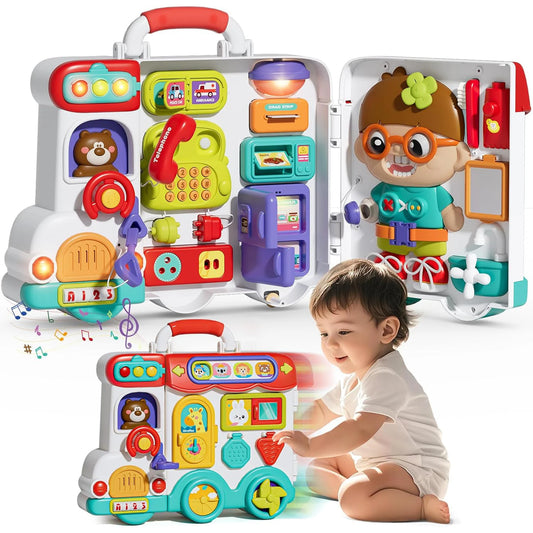
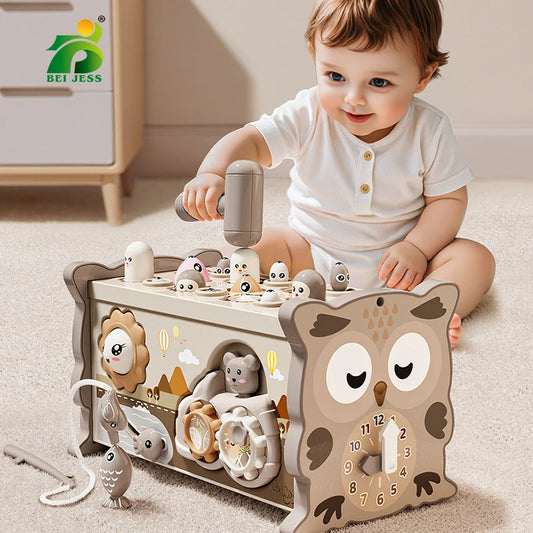
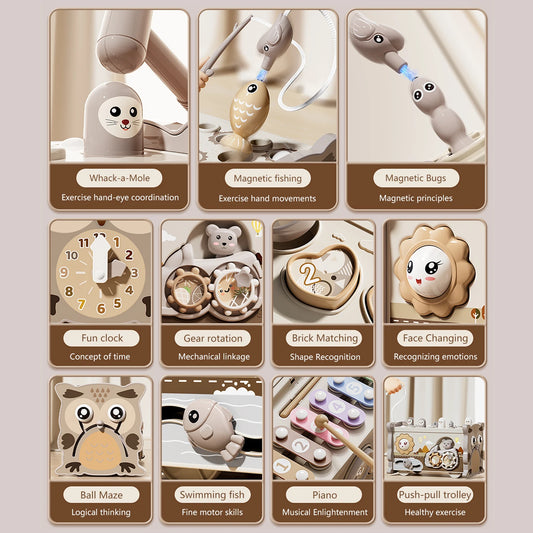

Newborn sensory toys can be simple: a from-birth high-contrast image, a securely made soft book, a gentle rattle used by an adult, or a safe tummy-time mirror can add variety during brief awake play. But newborns do not need a large toy collection. Your face, voice and gentle touch already provide sensory experiences, so toys should remain optional. A useful rule is to buy less, verify more: confirm the age guidance, inspect how the toy is built, and choose something you can control easily during awake play.
| Sensory play option | What to check | How to use it | Main caution |
|---|---|---|---|
| High-contrast cards | Explicit from-birth suitability; sturdy, intact construction | Use under adult control while baby is awake | Keep out of sleep spaces |
| Soft books | 0+/from-birth age guidance, secure seams, washable materials | Use for brief supervised looking or touch | Stop if seams or fabric parts loosen |
| Gentle rattles | From-birth age guidance, light weight, secure one-piece design | Adult shakes gently | Avoid hard, heavy or detachable parts |
| Texture toys | Secure fabrics or surfaces with no loose fibres or patches | Offer brief supervised touch | Avoid loose textures, cords or small parts |
| Tummy-time mats or mirrors | Stable positioning and non-breakable mirror design | Use during awake, supervised floor play | Remove before sleep |
For a broader age-by-age introduction, see Montessori Toys for Infants: Enhancing Learning from an Early Age.

What Sensory Toys Are Suitable for Newborns?
The Short Answer
The most suitable newborn sensory toys are simple, lightweight products that are explicitly marked from birth or 0+ and have secure construction. High-contrast images, soft books, gentle rattles and supervised tummy-time materials can be considered. Toys are optional, and a parent’s face, voice and touch remain valuable forms of sensory play.
Why Simple Interaction Comes First
In the newborn stage, sensory play can be as basic as looking at a familiar face, listening to a calm voice, feeling a gentle touch or briefly noticing a contrasting image. Raising Children Network notes that newborn play is fundamentally about interaction and that simple activities such as talking, singing, cuddling and making faces are enough to get started.
This is useful because it removes pressure to buy feature-heavy infant sensory toys. A newborn does not need flashing lights, multiple activities or constant entertainment. Choose only a few simple options if they genuinely make awake play easier for your family.
How Newborn Sensory Play Changes From 0 to 3 Months
The First Few Weeks
During the earliest weeks, keep play calm and easy to stop. Face-to-face time, quiet talking, singing, cuddling, skin-to-skin interaction and brief viewing of a simple high-contrast image can all fit naturally around feeding, changing and awake periods. There is no need to turn every alert moment into a structured activity.
If your baby looks away, becomes fussy or seems sleepy, treat that as a cue to reduce stimulation or finish. The goal is not to make a newborn concentrate for longer; it is simply to offer gentle opportunities to look, listen and feel when they are comfortable and awake.
Around One to Two Months
As babies become more alert, some may spend longer looking at faces or simple images and may begin following an interesting object with their eyes for short periods. Babies develop at different rates, so a toy should not become a test of progress.
You can slowly move a simple image or your face from side to side while staying close and responsive. Keep the movement smooth, avoid bringing objects too close to the face, and stop if the baby disengages.
Around Two to Three Months
By two to three months, tummy-time play may offer another way to introduce visual interest. A non-breakable mirror, simple face image or small from-birth toy can be placed within view while a carer remains right beside the baby. Raising Children Network recommends supervising tummy time and suggests safe objects, picture materials and non-breakable mirrors as possible points of interest.
Some babies may start early reaching movements, but do not expect or force this. Prioritise comfort and safety over milestones.
For ideas that continue beyond the newborn stage, see Encouraging Sensory Exploration and Motor Skills by Montessori Toys.
Newborn Sensory Toy Types
High-Contrast Cards and Images
Black and white toys for newborns and other high-contrast newborn toys can be used as simple visual materials during awake time. Choose intact, age-appropriate cards that an adult can control, and hold them where the baby can comfortably look.

High contrast is optional, not something a baby “needs” for normal development. Never leave loose cards in a cot or bassinet.
Soft Books and Simple Faces
A soft book can work when it is graded from birth, securely stitched and supplied with clear care instructions. Prefer simple pages without detachable pieces.
Check seams before use and after washing. A paper, felt or sticky activity book marked 3+ is not a newborn soft book simply because it uses words such as “baby”, “sensory” or “Montessori”.
Gentle Sound and Rattles
Newborn rattles should have explicit from-birth guidance, secure construction and a light, manageable design. For very young babies, the adult can create a gentle sound rather than expecting the baby to grip, shake or manipulate the toy independently.
Avoid loud sounds near the ears and reject rattles with loose decorations or detachable components. If the product has electronics or batteries, it deserves extra scrutiny; Australian requirements for toys intended for children up to 36 months include secured battery compartments.
Textures for Supervised Touch
Texture toys can be as simple as securely sewn fabric or crinkle material in a from-birth product. Keep the item under adult control.
Avoid products with shedding fibres, detachable fabric patches, beads, loose ribbons or unsupported claims about “boosting tactile development”. Texture is an experience, not a guarantee of a particular developmental outcome.
Tummy-Time Mats and Mirrors
Tummy-time sensory toys should sit safely on a stable floor surface and should not be able to fall onto or cover the baby. Mirrors need a non-breakable, baby-appropriate design with no sharp edges or exposed backing.
Use tummy-time toys only while the baby is awake and directly supervised. Stop using anything that shifts over the face, cracks or becomes damaged.
Everyday Interaction Without a Toy
Not every sensory activity needs a purchased object. Talking, singing, changing facial expressions, cuddling and letting a newborn notice ordinary changes in daylight and shadow can all add variety without adding clutter.
Do not hand a newborn keys, jewellery, remotes, phones, cords or other unsafe household objects for sensory play.
How to Choose a Product Marked From Birth
Exact Manufacturer Age
For newborn sensory toys 0–3 months, start with the manufacturer’s exact age guidance. Packaging or official product information should explicitly say from birth, newborn, 0+ or otherwise clearly include the newborn period. A retailer category labelled “baby” is not enough on its own.
If listing details conflict, use the more restrictive age information. Save products marked 3+, 6 months+ or toddler for later.
One-Piece Construction and Secure Components
Newborn products should be simple to inspect. Check stitched decorations, rings, handles, crinkle inserts, mirrors, squeakers and attached pieces to make sure they are firmly contained and cannot be pulled loose.
Australian toy rules address small detachable parts for children under 36 months because of choking and swallowing risks. For newborn play, simplicity makes inspection and supervision easier.
Cleaning and Drying
Follow the product’s exact cleaning instructions rather than assuming every soft toy can be machine washed or soaked. Wipeable products should be cleaned with methods compatible with their coatings, adhesives, mirrors and internal components.
Dry the toy completely before storage or reuse. Retire it if moisture stays trapped or cleaning damages its structure.
Size, Weight and Positioning
A newborn sensory toy should be easy for an adult to position without creating a risk that it will fall onto the baby or cover the face. Large soft items, heavy wooden pieces and hard protruding components are poor choices for close newborn play.
Do not wedge toys beside the baby, balance them above the face or improvise attachments. Keep positioning under adult control.
Newborn Sensory-Toy Safety Checks
Small Parts, Magnets and Batteries
Small parts, loose magnets and accessible batteries deserve particular caution around babies. ACCC Product Safety warns that toys for children under three must address small-part hazards, and button or coin battery products require secure compartments. Magnets can also cause serious harm if swallowed.
Prefer simpler options over toys with detachable magnets, loose hardware or battery features.
Cords, Loops, Clips and Hanging Toys
Inspect every cord, loop, strap, ribbon, elastic section and clip. A hanging feature should not be treated as automatically safe merely because it is sold for babies.
Do not attach toys to baby equipment unless its manufacturer permits that accessory and the toy is intended for the use. Never improvise strings or extensions.
Seams, Fillings, Mirrors and Coatings
Before each use, quickly check seams, fabric edges, stuffing, mirror surfaces, paint or coatings and any glued components. Normal wear can turn a previously intact toy into one with loose or exposed material.
Stop using the toy if a seam opens, filling becomes accessible, a mirror cracks or separates, coating flakes, or an attachment becomes loose. Supervision is not a substitute for removing a damaged product.
Awake, Supervised Play Only
Newborn sensory play should happen while the baby is awake and a carer is close enough to intervene immediately.
During tummy time, keep the setup easy to clear if the baby tires or moves unexpectedly.
Keep Toys Out of Sleep Spaces
Sensory toys should not remain in a cot or bassinet when a newborn sleeps. Red Nose recommends keeping soft toys and comforters out of the sleep environment during the early months and ideally keeping the sleep space clear for the first year.
Move cards, books, mirrors and rattles away before sleep: sensory toys are for awake play.
For a broader baby-toy safety checklist, read Are Montessori toys safe for babies?
How Much Sensory Stimulation Does a Newborn Need?
Watch the Baby’s Cues
Looking away, fussing, closing the eyes or becoming sleepy can be cues to reduce stimulation or stop.
Raising Children Network likewise advises following a newborn’s cues and switching to quieter play when a baby seems tired, startled or upset.
Keep Sessions Short and Flexible
Avoid rigid “sensory session” schedules. A few calm moments during a nappy change, a short look at a card, a song while cuddling or a brief tummy-time setup can be enough for one awake period.
Let the baby’s state guide the length; comfort matters more than completing an activity.
Avoid “More Stimulation Is Better” Claims
Feature count is not a useful measure. Extra lights, noises, switches and attachments can make a toy harder to inspect.
Be cautious with marketing that promises to maximise intelligence, accelerate milestones or provide essential “brain stimulation”. Sensory toys are play tools, not developmental treatments or guarantees.
How to Evaluate Current Toys4us Products
Why “Baby” and “Sensory” Are Not Enough
For newborn sensory toys Australia shoppers can buy confidently, product titles should never replace age evidence. Words such as “baby”, “sensory”, “educational” and “Montessori” describe marketing or play style; they do not prove suitability from birth.
A newborn recommendation needs consistent age information, appropriate construction and clear care guidance. If these are missing or contradictory, exclude the product.
Products Marked 3+ Must Be Excluded
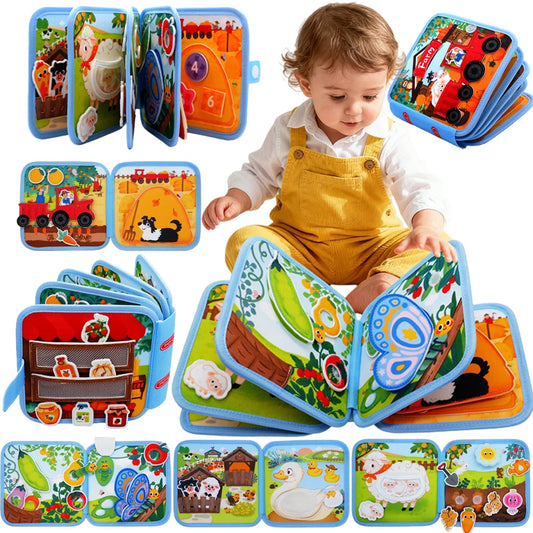
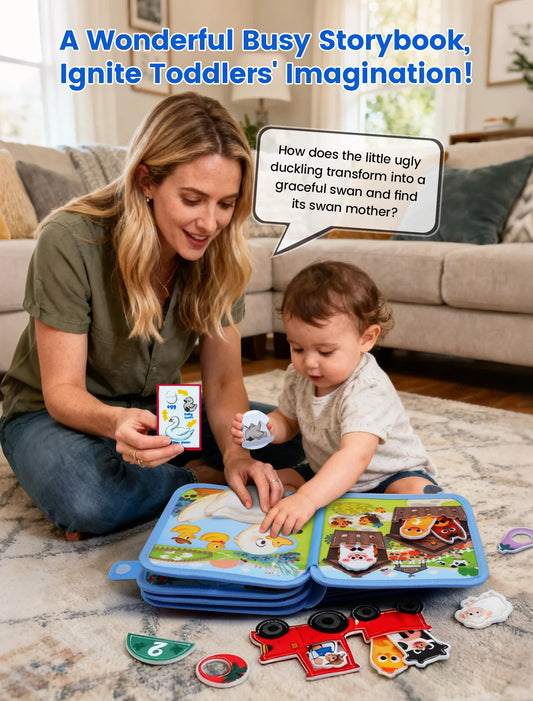
A live Toys4us listing for Busy Board Toys For Toddlers Busy Book currently states “Recommend Age: 3–6Y”. That makes it unsuitable for inclusion in a newborn recommendation, regardless of the Montessori wording or sensory activities in the description.
If a stated age begins above the newborn stage, do not override it based on product name or adult supervision.
Do Not Recommend Mixed-Age Busy Boards to Newborns
Mixed-age busy boards can contain latches, detachable pieces, hard protrusions, magnets, lights or electronics that do not suit simple newborn play.
Until Toys4us has a clearly verified from-birth range with consistent age guidance and newborn-appropriate construction, this guide should make no specific product or collection recommendation. As your baby grows, Best Toys for 6 Month Old Babies can help with the next stage. For later budget shopping, see Best Baby Toys Under $30: Affordable Gift Guide.
Frequently Asked Questions
Do Newborns Need Sensory Toys?
No. Newborns can receive plenty of sensory interaction through faces, voices, touch, cuddling, feeding routines and normal changes in their environment. Toys can add variety during awake time, but they are optional rather than a requirement.
If you buy one, prioritise from-birth guidance, secure construction and easy supervision.
What Are the Best Sensory Toys for 0–3 Months?
The best options are usually simple and easy to control: from-birth high-contrast images, securely stitched soft books, gentle newborn rattles, safe texture materials and stable tummy-time mirrors or mats.
Choose by age grading, construction, cleaning guidance and intended use—not feature count.
Are Black-and-White Toys Good for Newborns?
Black-and-white cards or other high-contrast images can be used as simple visual interest during brief awake periods. Hold or position them safely under adult control and let the baby look for as long or as little as they choose.
They are not essential; faces and ordinary interaction remain valuable visual experiences.
Can Newborns Use Rattles?
Yes, but only if the rattle is explicitly suitable from birth and is lightweight, intact and securely constructed. In the earliest weeks, an adult can make a gentle sound rather than placing a heavy or hard rattle directly in the baby’s hands.
Check for damage and keep sounds gentle and away from the ears.
Can Sensory Toys Be Placed in a Cot or Bassinet?
No sensory toy should be left in a newborn’s sleep space. Cards, soft toys, mirrors, rattles and other play items should be removed before the baby is put down to sleep.
Red Nose guidance supports keeping soft toys and comforters out of the early sleep environment.
Are Montessori Sensory Toys Suitable From Birth?
Some may be, but the word “Montessori” does not establish an age rating. A Montessori sensory toy for newborns still needs explicit from-birth guidance, secure newborn-appropriate construction and clear instructions for safe use and care.
If it is marked 3+, 6 months+ or toddler, wait until that age. For broader guidance, see Montessori Toys for Infants: Enhancing Learning from an Early Age.
Final Thoughts
The safest approach to newborn sensory toys is also the simplest. Start with interaction: your face, voice and gentle touch. If you add toys, choose only products that clearly include the newborn stage, keep them lightweight and easy to inspect, and use them during brief awake, supervised play.
There is no need for a large sensory collection. A few carefully chosen materials—or no toys—can fit newborn life perfectly well. For broader guidance as your baby grows, continue with Montessori Toys for Infants: Enhancing Learning from an Early Age.