
The best educational toys for preschoolers are toys that encourage children to actively do something: solve a puzzle, build a structure, tell a story, sort objects, pretend, create, move or cooperate with someone else. For children aged roughly three to five, puzzles, construction sets, pretend-play resources, early maths and language materials, art supplies and movement games can all provide valuable learning opportunities when the challenge matches the child’s current abilities and interests. Parents comparing educational toys for preschoolers Australia should therefore look beyond the word “educational” on the packaging and consider what the child will actually do during play.
| Toy category | What children do during play | May support | What to look for |
|---|---|---|---|
| Puzzles | Match, rotate, compare and test pieces | Problem-solving, spatial awareness, persistence | Appropriate piece count and clear images |
| Construction toys | Stack, connect, design and rebuild | Planning, creativity, fine motor skills | Open-ended pieces and multiple build options |
| Language toys | Describe, sequence, name and tell stories | Vocabulary, communication, early literacy | Pictures, storytelling prompts and conversation potential |
| Maths toys | Count, sort, group and compare | Number awareness and early mathematical thinking | Objects children can physically manipulate |
| STEM toys | Experiment, construct and observe | Cause-and-effect and problem-solving | Hands-on activities rather than passive demonstrations |
| Pretend-play toys | Role-play everyday situations | Communication, imagination and social play | Flexible props that allow different scenarios |
| Creative toys | Draw, mould, paint, make music | Self-expression and fine motor practice | Materials with more than one possible outcome |
| Movement games | Balance, throw, move and cooperate | Gross motor play and turn-taking | Clear rules and adjustable difficulty |
Related Products
What Are the Best Educational Toys for Preschoolers?
There is no single toy that is best for every preschooler. Educational value depends largely on the interaction between the child, the toy and the way it is used. A simple set of blocks may provide opportunities to explore balance, patterns, counting, storytelling and cooperative play, while a highly electronic toy may offer relatively little active involvement if the child mainly presses a button and watches it respond.
A useful starting point is to choose toys that invite children to make decisions, test ideas, communicate or create something. Families exploring Educational Toys Australia can compare options according to the type of play they encourage rather than simply choosing products with the largest number of advertised features. This approach also reflects the broader principles discussed in The Importance of Educational Toys for Children, where meaningful interaction matters more than a product label.
Quick Selection Framework
Before buying, compare the child’s age with their current abilities rather than treating the age printed on the box as the only measure of suitability. Manufacturer age recommendations remain important for safety and product design, but two children of the same age may enjoy very different levels of complexity.
A practical comparison should consider age, interests, current ability, the next manageable challenge, the number of ways the toy can be used, opportunities for adult or group interaction, the size and number of components, clarity of instructions and overall durability. The strongest choice is often a toy that the child can begin using successfully but still has room to explore in more complex ways later.

What “Educational” Should Mean
Alphabet printing, numbers, flashing lights or an “STEM” label do not automatically make a toy educational. A better question is: What is the child required to think about or do? Matching shapes, working out how pieces connect, explaining an imaginary story or organising objects by size involves active participation that can provide opportunities for children to practise emerging skills.
Educational play also does not need to look like formal teaching. Preschool-aged children often explore concepts through repetition, experimentation and imaginative play. A toy may therefore be useful because it encourages comparison, communication, creativity or problem-solving rather than because it directly teaches a school subject.
Choose by Preschool Age and Challenge
For three-year-olds, suitable toys often have relatively simple rules and immediate, visible outcomes. Learning toys for 3 year olds may include chunky puzzles, simple matching games, large construction pieces, sorting activities, pretend food or household sets and easy art materials. At this age, a toy that allows quick success while still providing opportunities for repetition may be more engaging than one with several complicated stages.
Four- and five-year-olds may increasingly enjoy longer sequences, more detailed construction, cooperative games, early number challenges and richer pretend-play scenarios. Learning toys for 4 year olds might introduce multi-step puzzles or simple games with rules, while learning toys for 5 year olds can include more complex building challenges, story sequencing, beginner strategy games and hands-on number activities. Age should remain a guide rather than a race: increasing difficulty only helps when the child can stay engaged without becoming consistently frustrated.
| Approximate age | Useful challenge level | Examples of suitable play |
|---|---|---|
| 3 years | Simple, repeatable tasks with clear outcomes | Matching, chunky puzzles, stacking, basic sorting and pretend play |
| 4 years | Several steps, more choices and simple rules | Larger puzzles, construction challenges, sequencing and basic games |
| 5 years | Longer projects and greater independence | Detailed builds, early strategy, number games and storytelling activities |
Best Educational Toy Categories for Preschoolers
The most useful way to compare preschool learning toys is by the activity they encourage. Different categories provide different opportunities, and a balanced toy collection does not need to include every possible “learning feature”. A few well-chosen toys that invite repeated use can provide more varied play than a large collection of narrowly designed products.
When comparing categories, consider the child’s natural preferences as well as areas they may be ready to explore. A preschooler who enjoys building may experiment with counting or storytelling through construction, while a child who loves pretend play may practise language and cooperative skills through role-play.
Puzzles and Problem-Solving Toys
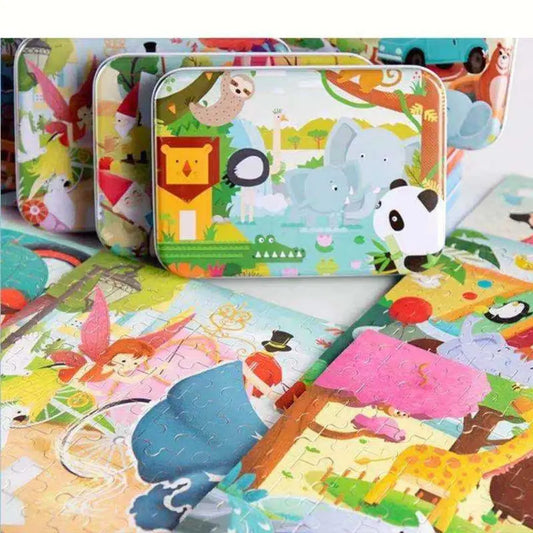
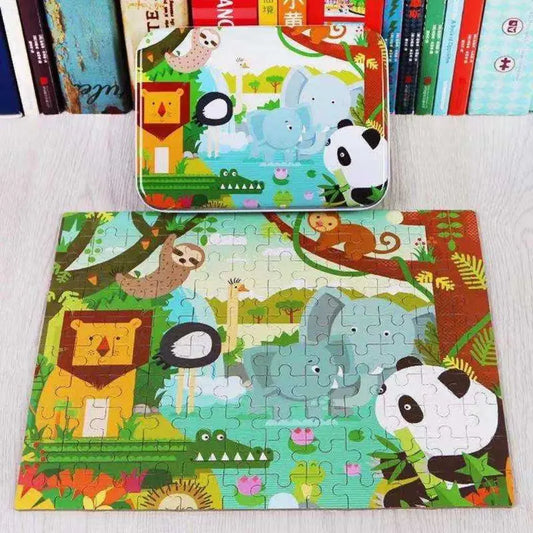
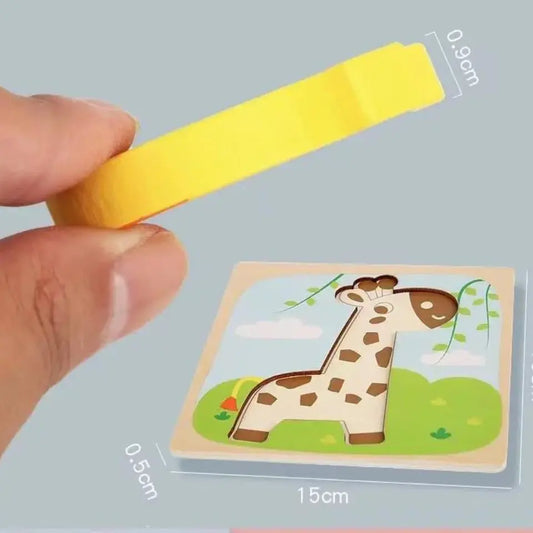
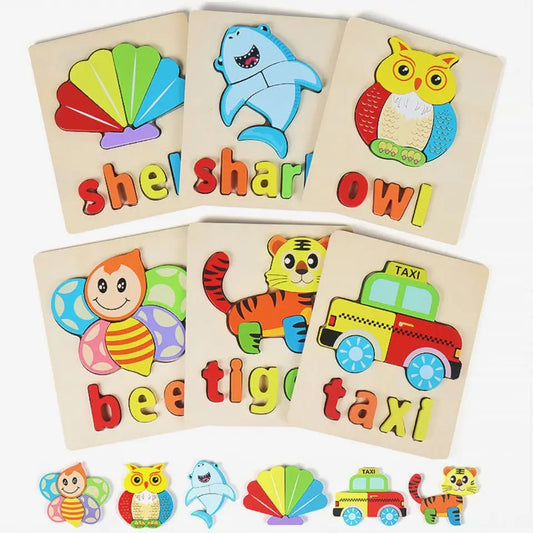
Puzzles encourage children to examine shapes, notice visual details, test orientation and adjust their approach when a piece does not fit. The appropriate level matters: a puzzle that is already effortless may lose interest quickly, while a large jump in piece count or visual complexity can make the activity unnecessarily frustrating.
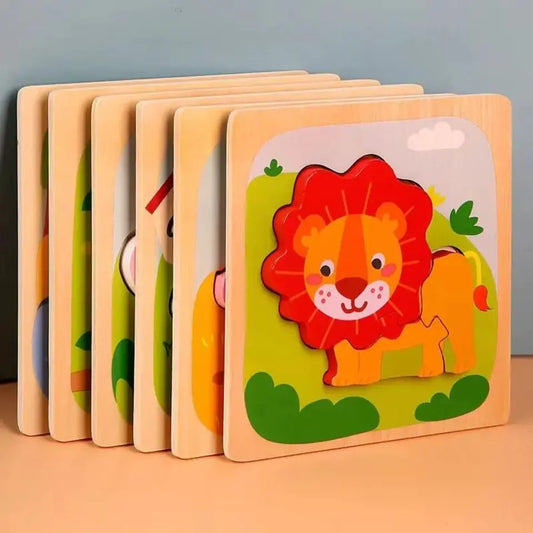
Parents can gradually progress from inset and knob puzzles to jigsaws, matching activities, sequencing games, mazes and other problem-solving toys. The Significance of Puzzles for Preschoolers can also help families understand why puzzle difficulty, picture design and opportunities for independent problem-solving are more useful comparison points than simply choosing the puzzle with the most pieces.
Language, Storytelling and Early Literacy
Literacy toys for preschoolers do not need to involve worksheets or formal reading lessons. Picture cards, puppets, magnetic letters, story cubes, sequencing cards, pretend-play figures and simple board games can encourage children to describe what they see, explain ideas and experiment with language.
Open-ended materials can be particularly flexible because adults can adjust the conversation to the child’s current level. A parent might begin by asking a child to name an object, then later invite them to describe it, compare it with another object or invent a story involving it. The same toy can therefore remain useful as communication becomes more sophisticated.
Counting, Sorting and Early Maths
Good maths toys for preschoolers make mathematical ideas tangible. Counters, stacking pieces, shape sorters, number puzzles, simple board games, measuring tools and objects that can be grouped by size, colour or type provide opportunities to explore quantity and comparison through play.
Instead of focusing only on recognising printed numerals, look for toys that let children physically manipulate objects. Counting five pieces, sharing pretend food between two characters or deciding which tower is taller can create meaningful opportunities to encounter early maths concepts in context.
Construction, STEM and Cause-and-Effect
Blocks, magnetic construction pieces, gears, marble-style tracks, simple engineering kits and age-appropriate experiment sets are common STEM toys for preschoolers. Their educational potential comes from experimentation: children can make a prediction, build something, observe what happens and modify the design.

The strongest preschool STEM activities usually keep the child involved in the process rather than presenting a finished demonstration. Construction toys are especially versatile because the same pieces can be used to make towers, bridges, vehicles, patterns or imaginary environments. Fewer restrictions can often mean more opportunities for testing different ideas.
Pretend Play and Everyday-Life Toys
Toy kitchens, play food, dolls, animal figures, tool sets, medical kits, shops and dress-up resources can encourage children to recreate situations they observe in everyday life. During pretend play, children may negotiate roles, describe actions, sequence events and adapt stories as another person contributes ideas.
Pretend-play resources do not require electronic sounds or highly realistic detail to be useful. Simple props often leave more decisions to the child. A wooden block might become a phone, food item, ticket or building depending on the game, demonstrating how open-ended materials can support many different kinds of imaginative play.
Art, Music and Creative Toys
Drawing materials, washable paints, modelling compounds, collage resources, beginner craft kits, instruments and rhythm toys allow preschoolers to produce something that does not have one predetermined correct answer. Creative activities may provide opportunities to practise hand control, planning and self-expression while children experiment with colour, shape, texture and sound.
When choosing creative toys, consider whether the activity allows genuine choice. A kit where every child is expected to create an identical final product offers a different kind of experience from open-ended materials that can be combined repeatedly. Both can be enjoyable, but flexible materials generally provide more opportunities for independent decisions.
Movement and Cooperative Games
Educational play is not limited to tabletop activities. Beanbags, balance equipment, throwing games, obstacle-course pieces and simple outdoor games can encourage children to control movement, judge distance and respond to instructions while remaining physically active.

Educational games for preschoolers can also introduce turn-taking and cooperative play when the rules are simple enough to understand. At this age, games do not always need to emphasise winning. Activities where players build something together, imitate actions or work towards a shared objective may offer useful opportunities for communication and participation.
Montessori and Play-Based Educational Toys
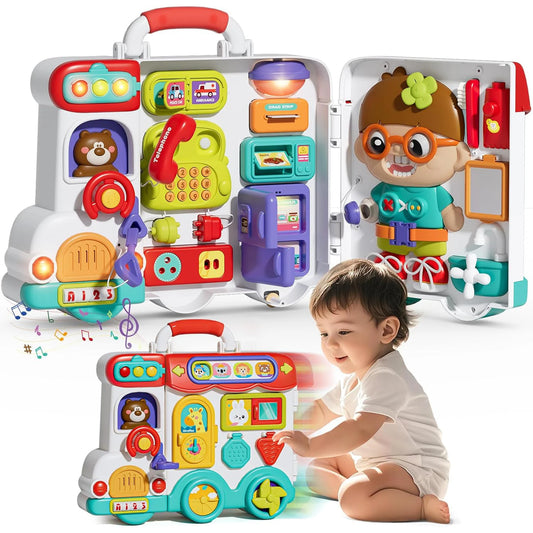
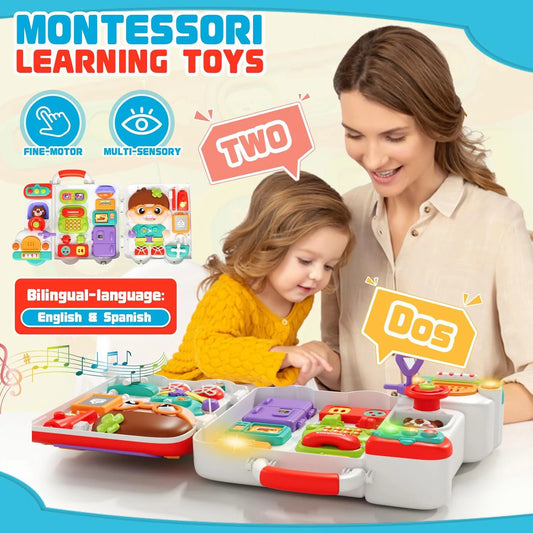
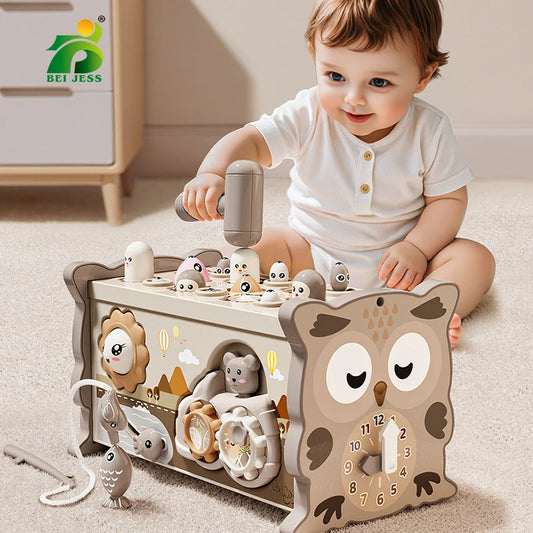
Montessori toys for preschoolers are popular with families who prefer simple materials, practical activities and opportunities for independent exploration. Many products described as Montessori-inspired use features associated with this style of play, such as natural materials, straightforward tasks, self-correcting activities or realistic everyday-life themes.
However, a Montessori label should not replace normal product comparison. Consider the actual activity, age guidance, component size, durability and how much freedom the child has to explore. A toy does not become more educational simply because its packaging uses Montessori terminology.
Montessori-Inspired Does Not Mean Certified
“Montessori-inspired” is a broad marketing description rather than a guarantee that a toy follows a particular educational programme. Products sold under the term can range from simple sorting boards to busy boards, practical-life activities, puzzles and construction sets.
Parents can therefore judge Montessori-style products in the same way as any other toy: examine what the child does, whether the challenge is appropriate and whether the design suits the child’s interests. The useful features are the characteristics of the activity itself, not the label alone.
Simple Versus Multi-Activity Toys
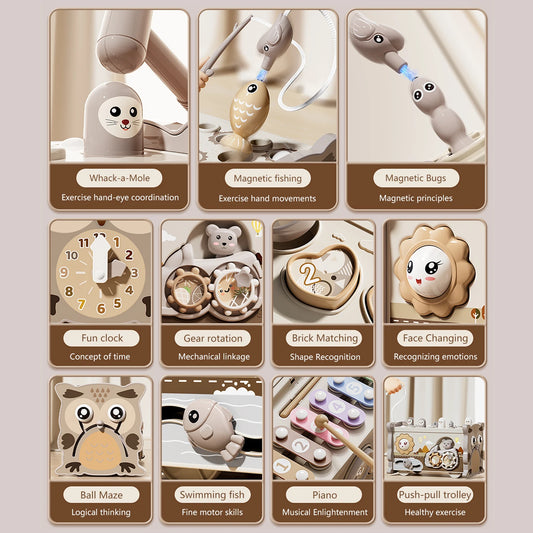
A simple toy may focus on one broad action, such as stacking, building or fitting pieces together, while a multi-activity product may combine switches, laces, matching tasks, numbers, shapes and other elements. Neither format is automatically better.
Simple toys can encourage deeper repetition and imaginative reuse, whereas multi-activity toys may offer variety during travel or shorter play sessions. When comparing them, consider whether the features form meaningful activities or are simply included to increase the number of advertised functions.
Real-World Skills and Open-Ended Play
Practical-life toys may imitate activities children see at home, such as preparing food, cleaning, fastening clothing or using tools. These materials can provide opportunities to practise sequencing, hand movements and pretend participation in everyday routines.
Open-ended toys take a different but complementary approach. Blocks, figures, play silks, modelling materials and loose construction pieces do not dictate one final result. Children can repeatedly reinterpret them, which may make a relatively simple set useful across several stages of preschool play.
How to Compare Educational Value and Product Quality
Start with evidence available about the product itself. Check the formal age recommendation, included components, assembly requirements, instructions and intended way of playing. For younger preschoolers in particular, small components and products intended for older children should not be treated as appropriate simply because the activity looks educational. Clear manufacturer information is more useful than vague claims such as “develops intelligence” or “guarantees school readiness”.
Then compare how much active participation the toy encourages, whether the difficulty can grow with the child and whether the construction is suitable for repeated use. Durability, replacement pieces, storage requirements, ease of cleaning and the amount of adult setup required can all affect how often a toy is actually used. Families working within a budget can also compare options through Best Educational Toys Under $50, as educational value depends more on the quality of play than on price alone.
| Comparison point | Useful question to ask |
|---|---|
| Age guidance | Does the manufacturer list an age range that fits the child? |
| Challenge | Can the child succeed while still having something new to work out? |
| Active participation | Does the child build, sort, create, communicate or solve something? |
| Replay value | Can the toy be used in more than one way or at several difficulty levels? |
| Interaction | Can a parent, sibling or friend join the activity naturally? |
| Components | Are all pieces and accessories clearly listed and suitable for the intended age? |
| Instructions | Are setup and play instructions understandable? |
| Durability | Is the toy likely to cope with repeated preschool use? |
| Storage | Is it realistic to keep all components together? |
| Marketing claims | Does the product explain the activity rather than relying on broad learning promises? |
Frequently Asked Questions
What Makes a Toy Educational for a Preschooler?
A toy can be considered educational when it gives a child opportunities to practise useful thinking or actions through play. Examples include comparing shapes, planning a construction, explaining a story, counting objects, experimenting with cause and effect or cooperating with another player.
The key factor is active participation. Educational value comes less from printed letters, lights or marketing labels and more from what the preschooler is encouraged to notice, decide, attempt and repeat.
What Are the Best Learning Toys for Ages 3–5?
For many preschoolers, strong options include puzzles, construction sets, pretend-play resources, sorting and counting materials, story-based toys, art supplies, beginner games and simple STEM activities. The best category depends on the child’s age, interests and current challenge level.
Three-year-olds may prefer shorter and more repeatable activities, while four- and five-year-olds may enjoy multi-step tasks, more complex construction and simple rule-based games. Children do not need to progress through these categories at exactly the same age.
Are Montessori Toys Better for Preschoolers?
Montessori-inspired toys can be useful when they encourage independent exploration, practical actions and focused play, but they are not automatically superior to other preschool learning toys. Many non-Montessori products offer similarly valuable opportunities for building, imagining, sorting and problem-solving.
Compare the individual toy rather than the label. Age suitability, activity quality, challenge, replay value and the child’s interest are more informative than whether “Montessori” appears in the product name.
Are Electronic Toys Educational?
Electronic toys can provide educational play when the child needs to make decisions, respond to challenges or actively interact with the activity. A well-designed electronic game may encourage listening, matching, sequencing or problem-solving.
However, lights and sounds alone do not create learning value. If most of the experience consists of pressing a button and watching an automatic response, the toy may offer fewer opportunities for exploration than a simpler activity where the child controls what happens.
How Many Educational Toys Does a Preschooler Need?
There is no ideal number. Preschoolers do not need a large collection covering every developmental category. A smaller group of versatile toys may provide plenty of variety when each item can be used repeatedly or in several different ways.
Rotating available toys can also make familiar materials feel interesting again. The goal is not to fill every play session with explicitly educational products but to provide a manageable range of opportunities for construction, imagination, creativity, language, movement and problem-solving.
How Do I Choose a Toy That Is Not Too Easy or Too Hard?
Look for a challenge where the child can understand the basic goal and achieve part of the activity independently but still needs to experiment, practise or occasionally ask for help. This creates room for progress without making failure the dominant experience.
If a toy is consistently completed with almost no thought, it may be time to introduce an additional challenge. If the child cannot begin without constant adult intervention, consider simplifying the activity or returning to it later rather than assuming a more difficult toy will produce more learning.
Choosing the Best Educational Toys for Preschoolers
The best educational toys for preschoolers are not necessarily the toys with the most features, the highest price or the strongest learning claims. They are toys that match the child’s stage of development and invite active play through building, comparing, imagining, communicating, creating, moving or solving problems.
For Australian families choosing between puzzles, STEM toys for preschoolers, literacy activities, maths materials, Montessori-inspired toys and pretend-play sets, the most useful question is simple: what opportunities does this toy give the child during play? Choosing according to that question makes it easier to find toys that remain enjoyable while providing appropriate opportunities for exploration and gradually increasing challenge.